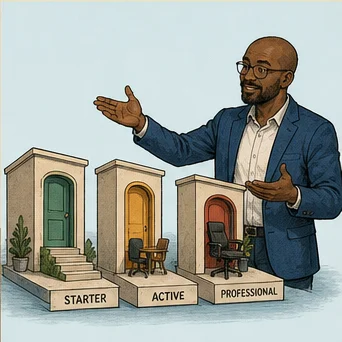
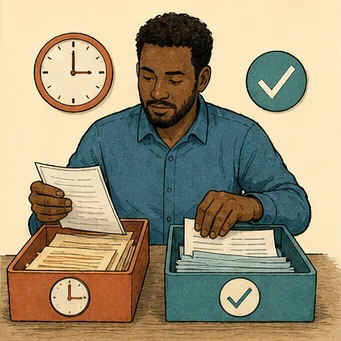
Reaching the funded stage after passing an evaluation often feels like the final hurdle in your trading journey, but it is actually the beginning of a new phase. You must prepare for your first payout by understanding that funded accounts operate under different rules than the evaluation phase. Every firm sets its own unique requirements for drawdown calculation, withdrawal windows, and technical platform settings that differ from the challenge environment. You should read the terms directly from the firm and avoid treating your successful completion as a green light to take extra risk. A passed challenge proves you can follow rules, but a funded account requires you to maintain that discipline while managing actual capital.
The primary objective during your initial funded period is to demonstrate controlled, repeatable execution and maintain accurate administrative records. Payout eligibility remains tied strictly to the current service agreement and the specific history of your account. No plan can ever guarantee a payment or promise a specific timeline because firm policies are subject to change. Your success depends on your ability to read the fine print, follow the established procedures, and keep your risk exposure within the bounds of your personal plan. Treat this as a business task that demands your full attention to detail and a commitment to stability above all else.
This article covers one part of the decision. The main prop firm passing service guide explains how first payout plan for a prop firm account connects with preparation, risk control, and the funded stage.
Treat Funding as a New Account
Many traders assume that because they passed an evaluation, they understand how the funded account works. This is a dangerous assumption. You should compare your current funded conditions against your old evaluation rules point by point. Look specifically at how the drawdown is calculated, which financial products are permitted, what the holding rules look like, and how the firm handles payout schedules. Even if the platform looks identical to the one you used during testing, the underlying rules might have changed once real capital is involved.
Take the time to create a brand new rule sheet that you keep open during your trading sessions. This document should highlight every constraint, from the profit split to the specific consistency language the firm uses. If you skip this, you might accidentally trip a rule that did not exist during your challenge. It is better to spend an hour mapping these differences than to lose an account because you relied on old assumptions about how the trading environment operates.
Verify your credentials, server connection details, and symbol specifications before you place a single funded trade. Small operational differences can change your risk calculations entirely, especially if the firm uses different symbols or has different leverage limits on funded accounts. Check your dashboard limits to ensure you know exactly what activity is permitted. Being prepared is the difference between a smooth start and a technical mistake that costs you your spot in the program before you even get going.
Start With Conservative Risk
It is natural to feel the pressure of the evaluation fee you paid to get here, but trying to recover that fee immediately is a trap. Use a risk unit that survives normal market variation while leaving a comfortable buffer below your hard drawdown limits. If you typically risked 1% per trade, consider dropping to 0.5% for your first few weeks. You want to build a track record of survival, not a high score on the leaderboard. The goal is to establish stability in a live environment.
Keep your combined exposure small when your positions have high correlations. A funded account is particularly vulnerable when you have multiple trades that depend on the same currency, index, or sector. If you are long the S&P 500 and short the Nasdaq while simultaneously holding a large position in a technology stock, you are likely over-leveraged even if you feel like you are balanced. Markets often move in tandem during news events, which can trigger a drawdown that is much larger than you anticipated.
Your decision-making should be grounded in the long term. Consider a hypothetical scenario where you have a $50,000 account and a 5% drawdown limit. If you risk $500 per trade, you can handle 5 consecutive losses before you approach a danger zone. This level of risk allows you to learn the nuances of the funded execution without fearing that one bad morning ends your participation. Protect your capital with the same intensity that you protect your personal bank account.
Map Payout Eligibility
You need to write down the firm's stated minimum profit requirements, the qualifying days needed, the specific request window, the preferred payment method, and any account review conditions. Many traders fail because they confuse their displayed profit with their withdrawable amount. These are often two different numbers. The firm may require a certain amount of profit to remain in the account at all times, or they may apply a split that you must calculate carefully before making any assumptions about your actual income.
Check these details weeks before you plan your first withdrawal rather than waiting until the request day. Ambiguity is your enemy. If a term in the contract seems vague, such as a rule about news trading or consistency, send a request through the official support channel. Get their answer in writing and store it in a secure folder. Having a paper trail protects you if there is a misunderstanding during the review process or if the firm changes their policy suddenly.
Consider this hypothetical example. You have a $10,000 profit and a 70% split. You might think you get $7,000. However, the firm might require a $2,000 buffer to stay in the account, meaning you can only withdraw $5,600. If you do not calculate this correctly, your request might be rejected or cause an unnecessary administrative headache. Being precise about these numbers shows that you are treating the trading environment with the respect it requires for a professional outcome.

Keep Trading Explainable
Use the same tested setup, risk framework, and instruments that got you through the evaluation. Unless you have a documented, back-tested reason for changing your strategy, keep it simple. Your trading journal should be your best friend during this period. Every trade you take should have a clear, written rationale that you can look back on. If you cannot explain why you took a trade in a simple sentence, you probably should not have taken it in the first place.
Do not manufacture activity to satisfy a perceived consistency pattern. Some traders worry that if they do not trade every day, they look inactive. This often leads to taking bad trades just to show the firm that they are working. Consistency is about your process, not about forcing outcomes or hitting a specific number of trades per day. The firm cares that you are following the rules, not that you are providing them with constant commission volume. Stay focused on your core strategy.
If you find yourself deviating from your plan, stop trading immediately and re-evaluate. It is better to miss a profitable day than to take a trade that violates your consistency metrics and leads to a denied payout. A single exceptional trade might look like a lucky bet rather than a skilled execution to a firm's risk team. Keep your behavior predictable and explainable to protect your standing. A calm, methodical approach is much more sustainable than a chaotic one that fluctuates with your emotions.
Maintain Reconciled Records
Export your trade history regularly and compare it against the firm's dashboard. Ensure that your own records of commissions, swap fees, and closed versus floating profit match what the firm reports. Discrepancies can occur for many reasons, from technical glitches to misunderstood symbols. Finding these issues early makes it much easier to identify and resolve them before you submit a payout request. You want your own data to be a perfect mirror of the firm's ledger to avoid any surprises.
Keep dated copies of all your terms, support replies, and request confirmations in a secure location. If you ever have a dispute, having a folder full of timestamps and specific communications is vital. Never share your credentials or personal identity documents with anyone except the authorized channels specified by your firm. Use a secure, offline storage method for sensitive documents to prevent any accidental exposure. Treat your account security as seriously as you treat your account balance.
Think of your records as a defensive layer. If a firm asks why you took a specific trade, you can point to your journal. If a firm claims your balance is different from your internal logs, you can show them your reconciliation report. This level of professionalism separates traders who get paid from those who get frustrated by administrative delays. You are not just a trader; you are the manager of a small financial operation that requires complete transparency and ironclad organization.
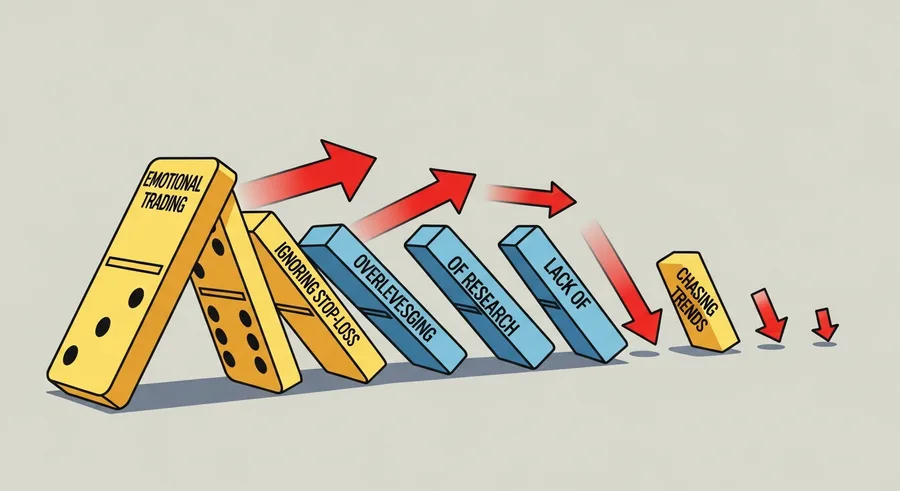
Related guide for First Payout Plan for a Prop Firm Account: A useful companion for this decision is How to Avoid a Prop Firm Payout Denial. No payout is guaranteed, but clear records, permitted trading methods, and careful verification can reduce avoidable friction before a request.
Calculate the Request Carefully
Before you submit your first request, calculate your eligible profit by subtracting the required buffer and the firm's fee structure from your total gains. Do not assume the full balance is available. Many traders make the mistake of requesting the entire amount they see on their screen, only to have the request denied because they did not account for the required equity that must remain in the account to stay compliant. Be conservative in your math to avoid a rejection.
Once you have calculated your number, verify your payment details again. Check that your legal name, your bank or electronic wallet details, and your required tax information match the firm's current instructions. A simple typo in your bank account number can lead to long delays or failed transfers that might take weeks to resolve. Double-checking your information now is much faster than fixing a broken payment chain after the money has already been sent to the wrong place.
Submit your request and immediately save the confirmation and reference number. This is your receipt. If you do not hear back within the expected timeframe, you will need this reference number to communicate with the support team. Avoid changing your trade risk in the interim just to force your account to hit a rounder number. Your strategy should remain independent of your withdrawal requests. Focus on the process of execution rather than the excitement of the upcoming payment.
Trade Responsibly Between Requests
If your account remains tradable while your payout request is being processed, you must continue to follow your risk controls. Do not view the pending payment as a reason to increase your risk or take experimental trades. Many traders subconsciously become reckless while waiting for a payout, thinking they have already secured their prize. This is how you lose your funded status before the money even hits your account. Keep your routine identical to the one that got you to this point.
If you experience a delay in the firm's response, treat it as an administrative issue that needs a polite follow-up rather than a reason to panic. Do not share your credentials with anyone online who claims they can speed up your payout process. These people are almost always trying to compromise your account. Stick to the official support channel for all inquiries. If the wait is longer than expected, remain patient, keep your positions small, and wait for the firm to respond.
Your behavior during this window says a lot about your longevity as a trader. If you trade with discipline even when you are anxious about a payment, you are demonstrating the exact kind of professional mindset that propels a trader forward. Avoid the urge to check the status every hour. Set a time to check once a day, and spend the rest of your time focusing on the markets or reviewing your previous trades. Stay focused on your long-term success.
Build a Repeatable Cycle
After your first payout is successful, take some time to review the entire cycle. Look at your risk levels, your execution quality, your concentration, and any administrative friction you encountered. The goal is to build a better routine, not to believe that one successful cycle guarantees a future. Use the lessons you learned during this first period to tighten your processes and improve your workflow. Every payout is a new data point that confirms your process is working, but it is not a reason to relax.
Make gradual and measured changes only when your records clearly show that a change is necessary. Do not change your strategy just because you had a lucky week. If you need to make changes, document the reasoning in your journal and monitor the impact over several weeks. Preserve time away from your screens to clear your head. Keep clear conditions for when you will pause your trading, such as during unusual market volatility or when you feel like your process is suffering.
Think of this journey as a continuous loop of preparation, execution, and review. As you get more experience with the funded stage, your routine will become more natural, but you must never lose the vigilance that helped you get here. Stay independent in your thinking, maintain your records with care, and always put your risk management above your profit targets. This is how you build a long-term, sustainable career in funded trading. Every cycle is an opportunity to improve.
Scaling Positions Within Limits
A common mistake after a first payout involves scaling up position sizes too quickly to match the growth of your account balance. This ignores the fact that your drawdown limit often remains fixed based on your initial starting capital. If you expand your position size simply because your account balance grew by 10%, you are increasing your risk-per-unit while keeping your safety margin the same. This approach effectively shrinks your breathing room in the market.
Consider a hypothetical example where your account size is $100,000 with a $5,000 hard drawdown limit. If you trade 1 lot and grow the account to $110,000, your drawdown limit stays at $5,000. If you increase your position size to 2 lots because you feel more confident, a 2,500-point move against you now wipes out $5,000 in equity. You reach the firm limit twice as fast compared to your original 1 lot position. Always prioritize the stability of your margin over the temptation to trade larger sizes.
Assess your scaling plan against the volatility of the instruments you trade. Assets with higher average daily ranges require smaller position sizes to keep your risk within acceptable bounds. If you move into more volatile assets as your balance grows, you may actually need to decrease your total position size to maintain the same monetary risk per trade. Use your historical trade data to calculate your average loss per trade before you consider increasing your contract count.
Document any changes to your position sizing strategy in your journal at least 2 weeks before implementation. You want to see how this change impacts your emotional state and your account's drawdown profile during different market conditions. If the change causes anxiety or leads to erratic trade management, return to your previous sizing immediately. Scaling should be a boring, slow process that keeps your risk profile flat as your account equity climbs.
Related guide for First Payout Plan for a Prop Firm Account: For the next practical part of your preparation, continue with From Challenge to Funded Trader: A Practical Career Path. A challenge is one step in a longer trading path. Use this framework to build skills, protect accounts, and grow without letting a pass create new pressure.
Managing Platform Technical Failures
Technical problems such as internet outages or server disconnects are inevitable when trading through a third-party platform. Your priority during these events must be the preservation of capital rather than the recovery of a trade. Have a secondary internet connection available, such as a mobile hotspot, and keep the customer support contact information for your broker and your firm saved on your phone. You cannot afford to waste time searching for contact details while your position is moving against you.
Practice a manual kill switch routine where you immediately close all open orders and cancel all pending limit orders if your primary platform freezes. Do not attempt to restart your computer or re-log if you have an active open position during a high-volatility event. Using a mobile app provided by the firm for these situations is a better alternative than risking a long downtime on a desktop. Your only goal during a crash is to reduce your exposure to zero as fast as possible.
Consider a hypothetical scenario where your internet fails while you hold a position that is currently 200 in profit. Instead of waiting for the connection to return to see if the target gets hit, close the position from your phone application immediately. Waiting for the system to recover might result in a 300 loss if the market reverses. Protecting the 200 you already have is the professional choice. Never leave an unmanaged position during an active technical outage.
Review your platform log files after every technical glitch to understand what caused the issue. If the problem is your own hardware, upgrade your equipment or optimize your software settings to reduce resource usage. If the problem originates from the firm's server, submit a report to their support desk with a timestamp. Keeping a record of these issues helps you prove that a violation occurred due to external factors rather than your own trading errors.
Navigating High Volatility Events
Firm rules about news trading are often complex and can lead to immediate account termination if violated. Read the specific definition of a news event provided by your firm, as these often include restricted times before and after major economic releases. Some firms prohibit opening new trades 5 minutes before and 2 minutes after a report. You must know these time windows for every major release that affects your traded currency pairs or indices.
Check the economic calendar every morning before you open your charts. Mark the specific times when high-impact reports such as non-farm payrolls or central bank interest rate decisions occur. If you are uncertain whether a particular report triggers a restricted period, err on the side of caution. It is safer to sit on the sidelines during the news than to risk a payout-denying rule violation for the sake of a single move.
Think of a hypothetical case where you hold a position that is profitable leading up to a news release. If the rules prohibit holding during the news, you must close that position before the prohibited window begins. Even if your analysis suggests the market will continue in your direction, you must prioritize compliance. Holding through a restricted news event is a frequent reason for account disqualification. Your job is to follow the rule book, not to predict the market response to news.
Create a checklist of your own constraints for these events. This list should include the specific news items you avoid and the buffer time you maintain around them. If you feel compelled to trade during a major release, analyze why that trade is necessary. Usually, it is a sign that you are chasing volatility rather than following your strategy. Discipline during news hours is a key indicator of a trader who understands the importance of account longevity.

Managing the Post-Payout Mental Shift
The period immediately following your first successful payout is often the most dangerous time for your account. You may feel a false sense of security or a desire to reward yourself with larger trades. This mental shift, sometimes called the victory trap, can cause you to deviate from the conservative habits that earned you the payout. Acknowledge that the money in your bank account does not change the difficulty of the next trade you are about to take.
Avoid changing your daily schedule just because you have been paid. If you previously started your day with a market review at 8:00 AM, maintain that exact routine. Changing your habits signals to yourself that something significant has changed, which encourages risky thinking. Treat your trading day as a normal workday. Consistency is your best defense against the emotional fluctuations that come with receiving your first real earnings from the program.
Consider a hypothetical situation where you have a 3000 profit payout. You might be tempted to treat yourself to a new desk or monitor, but keep your trading environment focused on the task at hand. Do not let the payout change your view of the market. You are still the same trader using the same strategy. If you find your focus shifting toward future spending, take an extra day off from trading to clear your head before returning to the charts.
Set a simple goal for the day after your payout to ensure you remain grounded. Focus entirely on executing your strategy without looking at your total account balance or the status of your next payout. By forcing your attention back to the mechanics of entry and exit, you neutralize the urge to over-trade or increase your risk. A quiet, disciplined approach is the most effective way to ensure that your first payout is not your last.
Final Takeaway
A first payout should be viewed as a milestone in administrative and risk management, rather than an excuse to chase higher returns. By maintaining clear records and executing your trades with consistent caution, you protect your funded status and ensure your account can be reviewed fairly. Your role as a trader is to provide the firm with clear, predictable data, which makes the payout process much simpler for everyone involved.
Always confirm the current terms at every stage of your journey. Even though the platform and the tools might feel familiar, the rules governing a funded account are distinct. You remain fully responsible for every trade, every entry, and every credential you manage. By keeping your risk low, your records clean, and your communication professional, you build a sustainable foundation that allows you to focus on what really matters: your trading process.