
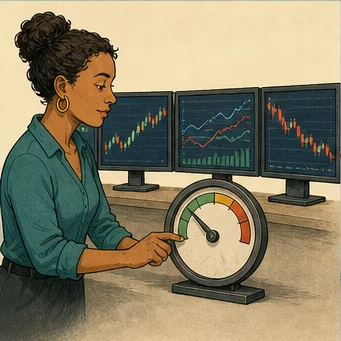
Managing multiple accounts at once creates complexity that grows much faster than your actual opportunity for success. When you run several accounts, you juggle different dashboard layouts, specific firm rules, reset schedules, instrument symbols, and unique account permissions. A single trading idea that seems sound can easily cause several correlated losses across your entire portfolio if you lose track of the big picture. It is easy to think more accounts simply mean more chances to profit, but each new addition introduces another layer of operational friction that can quickly become unmanageable.
A solid multi-account plan begins with a strict audit of what each individual firm allows. You must verify that your specific intended style is permitted on every account you hold. Beyond checking the fine print, you need to cap your total financial exposure across all accounts at all times. Keeping your ownership clear, maintaining precise records, and ensuring that every execution is transparent is the only way to stay in control. This guide focuses on the technical and psychological steps needed to handle multiple accounts without letting the mechanics of the process overwhelm your actual trading strategy.
Readers building a complete challenge plan can pair this review of multi-account prop firm risk management with the prop firm passing service guide, which compares the wider support process and its limits.
Confirm Account Permissions
You need to read the current terms for every firm where you hold an account. This includes sections on multiple accounts, copy trading, automated systems, third-party access, and identity requirements. Never assume that a program name implies the same rules across different providers. A practice that is perfectly acceptable at one firm might be strictly prohibited at another, potentially leading to a permanent account closure or loss of your evaluation fee. Always treat each account as a distinct legal and operational environment.
When you encounter a rule that feels vague, you should seek written clarification from the firm before linking any workflows. Do not rely on software labels or forum anecdotes to decide whether a specific type of mirrored activity is allowed. It is better to have an email thread from support in your files than to guess correctly ninety-nine times and fail on the hundredth. Save these official answers in a safe place so you can refer back to them if a manager or automated system ever questions your activity.
Many traders assume that because they own multiple accounts, they have the freedom to trade them as a single pool of capital. This is rarely the case. Firms have their own internal risk management systems that monitor your activity for patterns that deviate from their specific standards. If you run automated tools, verify that your software allows you to limit activity to specific accounts rather than blanketing your entire setup with the same orders. Even minor differences in commission structures or slippage can turn a small account into a liability when managed improperly.
Consider the role of identity verification as well. Some firms require that each account be tied to a unique legal identity or that you declare your total holdings with them. Failing to disclose all your accounts can violate the terms of service, even if you are not doing anything inherently wrong with your trading orders. Keep a master document of every login, account number, and the specific terms you agreed to when signing up. This serves as your primary reference for staying within the lanes set by each firm.
- Create a master spreadsheet listing every rule by account.
- Check all official language about copying and automation tools.
- Confirm all identity and disclosure requirements for every firm.
- Save all written support answers in a permanent, date-stamped folder.
Calculate Aggregate Exposure
You must base your risk management on the total potential cash loss if every related position hits its stop. Never focus on the percentage risk per account in isolation. If you have four accounts and you carry the exact same trade idea on all of them, a modest per-account decision turns into a massive hit to your total portfolio. A 10% loss on one account is manageable, but a 10% loss across four accounts is a catastrophic event that usually ends your participation in the programs.
Include all trading costs in your calculation, such as commissions, expected spreads, and slippage. If you cannot state the combined worst-case loss for your entire portfolio within five seconds, the setup is too complex for you to use live. You need to know the dollar value at risk before you place any trade. If the total number looks too high, you must reduce the position size or the number of accounts participating in that specific idea until the risk falls back into a comfortable range.
Think about this with a hypothetical example. Suppose you decide to risk $500 on a single trade. If you replicate this across five accounts, your total risk is $2,500. If your personal threshold for total daily loss is $2,000, this trade already exceeds your safety limit. You have effectively made a trade that is too large for your total capacity, even though each individual account looks fine on its own. This is the danger of fragmented risk management.
Always recalculate these totals before you enter any new positions during the day. Your risk profile changes as you close trades or as your profit buffers shift. If you have had a profitable morning, you might feel tempted to increase your size, but you must ensure that your aggregate exposure never crosses your internal threshold. Keep a calculator or a simple sheet open on your secondary screen that updates your total risk in real time as you manage your live trades.
- Calculate risk from the total potential cash loss of all positions.
- Incorporate all commissions and spreads into your total risk figure.
- Set a personal hard cap for your entire portfolio of accounts.
- Recalculate your aggregate exposure before adding any new trade entries.

Recognize Hidden Correlation
Correlation is not limited to trading the same symbol on different accounts. Long exposure in several equity indices often moves in lockstep. Currencies tied to the same macro economic event or commodities that react to the same supply data are also highly correlated. Diversifying your account names or using different chart windows provides a false sense of security. If your fundamental thesis is the same, your risk is concentrated, regardless of how you distribute the orders across your various platform windows.
Group all related positions into one single risk bucket. If you are long the S&P 500 on one account and long the Nasdaq 100 on another, you are essentially holding one large bet on tech stocks. Do not pretend these are different risks just because the symbols differ. Limit your combined loss for this group. If the market takes a sudden turn, these positions will likely stop out at the same time, hitting your portfolio with a cumulative, rather than individual, impact.
For example, consider a day where you are trading two different energy-related assets. You might enter a long position in oil on one account and a long in a natural gas contract on another. While these are different products, they share significant macro factors. If a major policy change occurs, both could gap against you. By viewing them as a single correlated trade, you might choose to take a smaller position in each rather than risking your full allowed amount on both assets.
Think about how your portfolio behaves during high-impact news. Most correlated assets stop moving independently when volatility spikes. The goal is to avoid situations where a single event triggers stop-losses across your entire account base. If you have several accounts, use them to stagger your entries or exits, but do not use them to double down on the same market direction. True diversification means managing the total amount of capital exposed to specific market sectors or themes.
Allocate Accounts Deliberately
Assign every account a clear, specific role that fits your rules and your personal capacity. Perhaps one account is dedicated to your core trend-following setup, while another is reserved for short-term range trading. You might even decide to keep an account idle until your main operations are proven to be stable. Do not add accounts simply because you have the buying power or because the idea of unused accounts feels like a waste of potential. Excess accounts are a liability.
Use the smallest number of accounts that you can manage accurately. More screens and more accounts can delay your decision making. When you are busy trying to reconcile several dashboards, it becomes much easier to miss a hard stop, a breach of a daily loss limit, or an accidental duplicate order. You are human, and your attention span is limited. Reduce the complexity to a level where you remain in total control of every single order you send into the market.
Consider this hypothetical scenario. You have three accounts. You dedicate one to conservative, slow-moving setups and two to more aggressive day trading. By separating them, you keep your aggressive trading from impacting your core capital too severely. If you decide to add a fourth account, you might find that you can no longer watch all your stops at once. This leads to fatigue and potential errors. Only expand your account count when your current system is functioning smoothly without stress.
Your goal should be an auditable and calm process. If you find that you are rushing to copy trade or manually mirroring orders, you have too many accounts. Each account requires an investment of time to track and report. If you cannot explain your current holdings and your total risk in under a minute, you are overextended. Scale back your operations until your workflow is manageable, and only then consider adding more volume back into your daily routine.
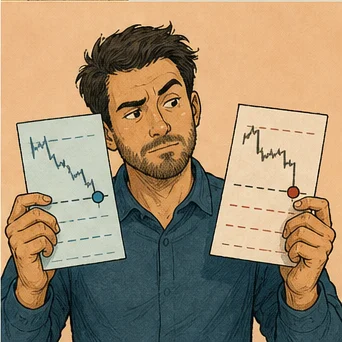
Related guide for Multi-Account Prop Firm Risk Management: A useful companion for this decision is Correlated Trades in a Prop Firm Challenge. Separate tickets can be one concentrated decision. Learn to group related markets, cap theme risk, and monitor combined exposure against drawdown.
Prevent Execution Errors
Use distinctive labels for every account to help your brain keep them straight. You can use different chart color templates or clear visual markers to distinguish one account from another on your screen. Always use a pre-trade confirmation window that displays the account, symbol, direction, volume, and stop level. A platform layout that you have memorized is not a substitute for checking where an order is going. Always verify the destination of every single order before you click send.
After a fill, pause to confirm your current positions and pending orders. Never assume that a click was successful, especially during times of high market volatility. You might see a delayed response from the server, leading you to click again and inadvertently double your position size. Avoid rapid, repeated clicking. Give the system time to process each command. It is much better to miss an entry than to accidentally double your risk due to a technical lag or a user error.
Imagine a situation where the market moves quickly, and you want to enter a position. You click to buy on your first account, but the screen hangs for a second. In your anxiety, you click again, and you also click buy on your second account. Suddenly, you have three times the position size you intended. You have created a massive, unplanned risk. By following a rigid confirmation ritual, you ensure that every move you make is intentional and correctly sized.
These small errors are the most common cause of early exits from a trading program. They are rarely due to a bad strategy, but rather to a poor execution process. Treat every order with extreme caution. Check the account name at the top of the order window every single time. If your platform does not show the account name prominently, find a way to modify your workspace. Your eyes should be able to confirm the account identity in a fraction of a second.
Use a Portfolio Daily Stop
Create a personal daily loss limit that covers your entire portfolio. This limit must be lower than the sum of the individual firm limits. If you reach your personal total, stop all trading immediately. This means closing or managing your existing exposure and stopping any new entries across the entire portfolio. You do not need to wait for a firm to tell you that you are near a limit. Your internal limit is your first and most important line of defense.
This control serves two vital purposes. First, it stops one account's loss from encouraging a revenge trade in another account. Second, it leaves you enough buffer to investigate platform problems or calculation errors before any official hard limit is actually hit. It gives you the space to step back and breathe if the market starts moving against you in a way you did not anticipate. It shifts your mindset from fighting for a win to protecting your remaining capital.
Consider a hypothetical portfolio with five accounts, each having a $500 daily loss limit. The total firm allowance is $2,500. You should set your personal daily stop at $1,500. This gives you a significant safety margin. If you lose $1,500 in a morning session, you must stop trading entirely. You are not allowed to push further just because you have $1,000 of theoretical limit left at the firm level. This keeps you in the game for another day.
Write down your plan for what happens when you reach this limit. Where will you put your screen? How will you block yourself from placing more trades? The plan should be simple. By having this written policy, you remove the emotional burden of the decision during the heat of a bad trading day. You simply follow the rules you made for yourself when you were calm. This consistency is the foundation of long-term survival in the world of professional trading evaluations.

Reconcile Every Account
Maintain a daily ledger that includes the account name, trade identifier, planned risk, actual result, costs, rule status, and your current buffer. Reconcile your platform history to each individual firm dashboard at the end of every trading day. Different firms have different reset times for their daily loss limits. These variations can make a combined spreadsheet look very misleading if you are not careful about the specific time zones and reset policies of each provider involved.
You must keep these records under your own control. Do not rely on the firm's website as your only source of truth. If you ever need to explain an error, resolve a discrepancy, or prove that a third-party tool was working as intended, you need your own independent documentation. Transparent and organized records are essential. They turn your trading into a business process rather than a guessing game. They help you spot patterns in your mistakes that you would otherwise ignore.
Take a look at your daily results from a cold, analytical perspective. Did you trade within your rules? Was the risk calculation accurate? Did you accidentally hold a correlated position that cost you too much? Your ledger should highlight these facts. If you see that your costs are eating too much of your profit, you might need to adjust your strategy to trade less frequently. If you see that you are constantly hitting your daily stop on one account, you should reduce your position size there.
This level of detail might feel like extra work, but it is the hallmark of a serious trader. It is not about writing long stories, but about capturing the key data points that define your success. Over time, these records will become your most valuable asset. They allow you to look back and see exactly where you went wrong and how you can do better tomorrow. They provide the objective feedback you need to grow your account portfolio in a sustainable and safe way.
- Maintain a daily ledger of all trades across all accounts.
- Reconcile platform history against firm dashboards daily.
- Adjust for different reset times between various firms.
- Control your own records independent of the provider websites.
Plan for Simultaneous Stress
Assume that a major event, a connectivity issue, or a human error will eventually affect several accounts at the same time. Write out the exact order in which you will inspect your exposure, cancel pending orders, use your backup internet or computer, and contact official support if necessary. This needs to be a written script. You do not want to be improvising while your accounts are losing money during a sudden market crash. You need to know your exact next move.
Practice this procedure without any live market pressure. A plan that requires you to manually manage twenty positions in ten seconds is unrealistic when volatility picks up and your screen starts lagging. Keep your steps simple. If you have to do too much, you are setting yourself up for failure. The best stress plans involve a quick way to reduce risk and then a total withdrawal from the market until you have stabilized your technical environment.
Think about a hypothetical situation where your primary internet service goes down while you have active trades on four separate accounts. What is your first move? Do you have a secondary mobile connection? Do you know the phone number to call for a liquidating order? A simple, low-tech plan is often the most reliable. If you can handle the basics of risk management, you can usually survive the temporary loss of a platform or connectivity without losing your entire evaluation.
Review your stress plan every few months. Technology changes, and so do firm policies. Make sure your contacts are current and your backup hardware is functional. If you are trading on a laptop, consider how you would get out of your trades if the battery died or the software crashed. Having a plan does not prevent bad things from happening, but it ensures that you remain calm and rational when they do. Rationality is your greatest advantage when others are panicking.

Related guide for Multi-Account Prop Firm Risk Management: For the next practical part of your preparation, continue with Prop Firm Daily Loss Limit Calculator: Plan Your Risk Buffer. Turn a published daily-loss rule into a practical worksheet that accounts for equity, open exposure, costs, reset time, and a personal safety buffer.
Maintain Consistent Operations
Consistency is more than just following a strategy. It is about how you run your trading as a professional operation. Every day should start with a review of your setup. Check your hardware, your internet, your data feeds, and your login sessions. If one piece of the puzzle is out of place, do not start trading until it is resolved. It is better to miss a good trade than to have a technical failure occur while your capital is on the line.
You should keep your workspace as clean and predictable as possible. If you use multiple monitors, ensure they are stable and that your platform windows are where they should be. Avoid cluttering your desktop with unnecessary news feeds or chat windows that might distract you. When the market moves, you want your focus to be solely on your charts and your risk management metrics. Everything else is a potential distraction that can lead to a critical, costly error.
Consider how you feel before you start your day. Are you tired or distracted? A professional knows that trading requires peak mental performance. If you are not in the right mindset, it is better to take the day off. You are competing against people who are at their best. If you show up at half-capacity, you are giving away an edge. Take care of your health and your routine so that you can show up ready to execute your plan with precision and focus.
Remember that you are the final auditor of your accounts. The firm does not care about your personal stress or your technical problems. Their systems are rigid and automated. It is your job to understand those systems and to build your own personal safety net around them. By staying consistent and keeping your operations predictable, you reduce the chances of a catastrophic failure. You build a foundation that can withstand the ups and downs of a professional trading career.
Scaling Your Portfolio Safely
When you decide to grow, do it slowly. Never add multiple accounts all at once. Add one, master the workflow, and ensure it does not break your existing process. Then, and only then, consider adding another. Scaling is not just about having more buying power; it is about having the operational bandwidth to manage that power effectively. If your performance dips when you add a new account, you have grown too fast. Retrench, simplify, and then try again.
Every time you add an account, consider how it changes your total portfolio risk profile. Do you need to lower your position size on your other accounts to compensate? Most likely, the answer is yes. You are essentially balancing a set of plates. The more plates you add, the harder it is to keep them all spinning. Be honest with yourself about your limits. There is no shame in operating fewer accounts if it means you stay in the program for the long term.
Think about scaling as a process of building a machine. You are the operator. You want to make sure your machine is running smoothly before you turn up the pressure. If you are struggling with two accounts, adding a third will not fix the problem. It will only make your mistakes more expensive. Focus on optimizing the performance of your current accounts first. Once you have a proven, stable, and profitable system, the scaling process will feel much more natural and secure.
Always keep the end goal in mind. You are looking for long-term consistency, not a quick spike in performance that lands you with a rule violation. The most successful traders are the ones who can survive the inevitable market swings without blowing up. By being conservative and methodical, you build a resilient business that can survive for years. That is the true measure of success in this industry. It is a slow, steady grind, not a sprint.

Periodic Portfolio Review
Set aside time at the end of every week and every month to review your entire portfolio. Look at the performance of each account and the aggregate performance of your whole group. Are you seeing patterns that you missed during the daily grind? Maybe one firm has better execution for your style, or maybe one account is consistently underperforming because of its specific rules. These insights can help you optimize where you put your capital and your effort.
This is also a great time to check for rule changes at the firms. They update their terms more often than you might think. A quick scan of their communications or their website can save you from a major headache. Ensure that your contact information is correct and that you are receiving their updates. Being informed is a basic requirement for staying safe in a multi-firm environment. Do not treat this as optional work; it is essential business maintenance.
Look at your personal behavior as well. Did you break your rules this week? Did you feel overly stressed? These are signals that you need to adjust your setup. Maybe you need a day off, or maybe you need to lower your overall risk limit. A good reviewer is always willing to be critical of their own process. You are the one who is responsible for your outcomes, so take the time to ensure you are happy with the direction you are heading.
Finally, think about your long-term goals. Does your current mix of accounts still serve your vision for your trading business? Maybe you have outgrown a certain type of firm, or maybe you want to try a new approach. Whatever your goals are, make sure your daily setup aligns with them. Keep your eyes on the horizon while you manage the details of your daily trade. This balance is what allows you to move forward with purpose and confidence.
Final Takeaway
Managing multiple accounts successfully requires shifting your mindset from individual account rules to a unified, aggregate risk strategy. Your total risk is the sum of all correlated positions, not just the rules on a single account. By keeping your operational complexity low and your records transparent, you can navigate these setups safely.
Always verify every order, document every trade, and maintain a personal, portfolio-wide daily loss limit that stays well within the thresholds of your firms. Growth should only occur when your existing process is stable, auditable, and calm. True success comes from controlling the mechanics of your business as much as your actual trading decisions, ensuring that you can survive and perform consistently under any market condition.