
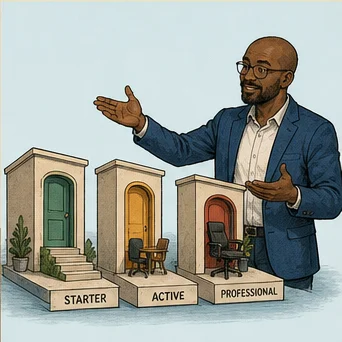
Securing a funded account represents a major shift in how you operate. Transitioning from the evaluation stage to a live-funded environment is not just about having capital to trade. It requires a fundamental change in mindset and planning. Once you pass your evaluation, you are effectively running a small business. Your primary objective shifts from chasing rapid growth to maintaining strict operational discipline. Many traders experience a sudden loss of focus after achieving their goal. This lapse often results in unnecessary rule violations or poor trade execution. Treating the post-pass phase as a formal, documented process protects your access to the capital. Understanding the specific risk, verification, and timing requirements is essential to managing your expectations.
A successful payout request is the culmination of disciplined trading and diligent record-keeping. You should view every transaction through the lens of a professional firm audit. Clear, organized records prevent confusion if the firm flags an account for review or if the payout cycle window shifts unexpectedly. This guide breaks down the essential tasks required to maintain your funded status while navigating the withdrawal process effectively. By preparing for these administrative steps before you actually request a payout, you free up your mental bandwidth to focus on actual trade execution rather than scrambling to understand complex rules at the last possible minute.
If you are comparing independent preparation with structured support, the main prop firm passing service guide places prop firm payout readiness: what to do after you pass inside the complete evaluation process.
Read the Funded-Stage Rules
Many traders assume that the rules governing their evaluation carry over exactly to the funded account. This is a dangerous mistake. Always download and study the specific funded-stage agreement independently from the marketing materials used for the evaluation. These contracts often contain technical nuances that do not apply during the test phase. Focus specifically on how the firm defines drawdown. Is it trailing, fixed, or based on end-of-day balances? Misunderstanding this single term often leads to immediate termination of a funded account.
Check the list of permitted instruments and any specific holding time restrictions. Some firms mandate that positions must be closed before the market closes for the day or during high-impact news releases. Others have strict requirements about the minimum number of active trading days required before you can request your first payout. Familiarize yourself with how inactivity periods are tracked. If you take a break, will the account be considered inactive and closed? Know these thresholds well before you place your first funded trade.
The profit split arrangement can also vary based on your tier or the specific contract you signed. Pay attention to the payout cycle details. Some firms allow withdrawals once a month, while others might offer a bi-weekly cycle. Do not rely on forum rumors or dated blog posts about these terms. Save the current version of the agreement in a secure local folder. If you find any terms that are ambiguous, email support and ask for written clarification before you proceed. Keeping this correspondence is just as important as reading the original contract.
Consider a hypothetical scenario where a trader moves to a funded account expecting standard volatility. They take a large position on a major news announcement because they felt lucky. The contract terms they ignored explicitly forbade news trading. Even if the trade was profitable, the firm identifies the breach, invalidates the gains, and closes the account. This failure stems from a lack of diligence. A passed evaluation does not grant immunity from the strict rules outlined in the funded-stage documentation.
Protect the Account First
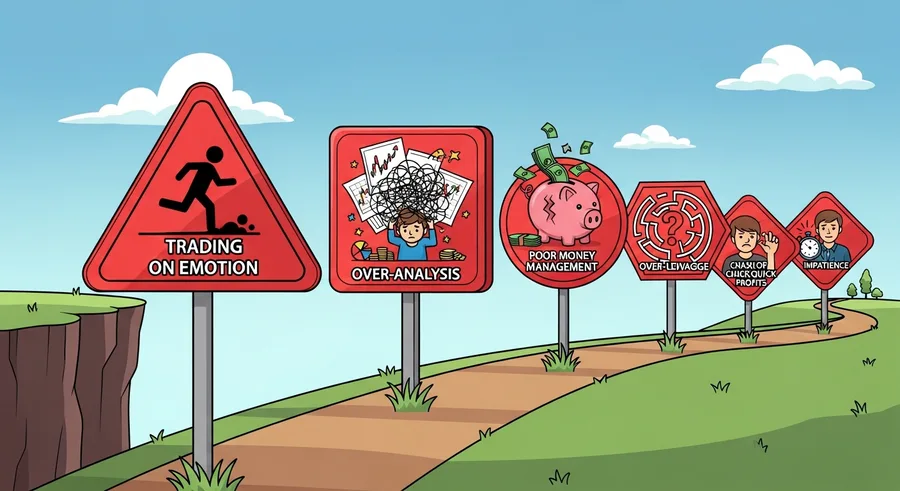
The most critical decision you make upon receiving a funded account is to ignore the temptation to trade larger sizes immediately. Your psychological state is likely elevated after passing the evaluation. This can lead to overconfidence. Establish a personal drawdown limit and a daily stop loss that are significantly tighter than the firm's hard limits. If the firm allows a 5% drawdown, consider setting your own internal alarm at 2%. This gives you a critical buffer to absorb natural strategy variance without triggering a catastrophic breach.
Your first month as a funded trader is the worst possible time to test a new automated script or an unfamiliar market. Stick to the exact strategy that helped you pass the evaluation. The goal is to prove to the firm that you are a consistent operator, not an aggressive gambler. If your strategy relies on high-frequency scalp setups, do not try to switch to swing trading simply because you now have access to a larger account balance. Your risk must fit repeated, reliable execution rather than an arbitrary target amount.
If your normal strategy variation threatens your account balance, reduce your position size immediately. It is better to make a small, steady profit than to risk a major drawdown on one or two trades. A disciplined approach looks for survival. If you experience a losing streak, accept it as part of the process. If a sequence of losses makes you feel anxious, lower your size even further until the volatility feels manageable again. Protecting the account is a continuous task, not a one-time event.
Think of a hypothetical case where a trader has a $50,000 account. The firm allows a $2,500 trailing drawdown. The trader usually risks $200 per trade. Instead of keeping that risk level, they scale up to $600 because they feel they have more breathing room. Three consecutive losses take them close to their limit. They start to panic and force trades to recover the balance. They eventually hit the drawdown limit because they stopped trading their edge and started trading their fear.
Consistency and Payout Conditions
Many programs look closely at your trading style before approving a payout. They want to ensure you are not using strategies that perform well in a simulation but fail under live execution. Some firms enforce a consistency rule. This rule might limit how much of your profit can come from a single day or a single trade. If you generate 60% of your total profits in one day, the firm might flag the account for review even if you did not violate any specific loss rule.
Pacing your trading is important. Do not manufacture activity just to meet a minimum day requirement or to satisfy a perceived need to show constant engagement. If your setup is not there, stay out of the market. Experienced traders know that capital preservation is part of consistency. Your journal should tell a coherent story. If the firm reviews your history, they should be able to see the same risk management logic applied consistently over time. A jagged equity curve with extreme highs and lows is a red flag.
Be prepared to explain your trading decisions if requested. If you had an unusually high-performing day, have a clear rationale based on your strategy and the market conditions. Documentation is not just about keeping account statements; it is about justifying your methodology. If you cannot explain why you entered a trade or why your performance peaked on a specific day, you may have trouble passing an internal review. Keep your trading record clean, simple, and explainable at any given moment.
Consider an illustrative example of a trader who makes 80% of their gains during a single market crash. While they followed the rules, the firm’s compliance team might view this as high-risk behavior that relies on extreme market volatility. The trader is asked to explain their entry and exit strategy during that period. If the trader simply says they got lucky or were just betting on direction, their payout might be delayed. If the trader shows a well-documented journal detailing their analysis of the event, the process will go much more smoothly.
Keep Good Documentation
Your administrative system is your insurance policy. Export your trade history from the platform at the end of every trading week. Save these statements in a dedicated folder on your computer and an external cloud drive. Do not trust the firm's dashboard to be the sole repository of your data. Occasionally, dashboards fail or report data differently than the back-end platform. If you have your own records, you can quickly reconcile any differences in calculations or balance updates.
Keep dated snapshots of the rule agreement document. If the firm updates its terms in the middle of your funded stage, you will have proof of which rules you were actually operating under at the time. This might seem like overkill, but when a dispute about a payout occurs, having a documented history is invaluable. Take screenshots of your dashboard balance at the end of each day. It provides a visual trail that verifies your progress over time.
Handle your identity and payment information with extreme caution. Ensure your government-issued ID is current. Expired documents will trigger an immediate rejection during the payout review process. Check that the name on your trading account, your bank or payment processor, and your identity documentation all match perfectly. Even small spelling discrepancies can cause delays that last for several days. Never send sensitive materials like passport copies to unverified email addresses or support tickets that seem suspicious.
Always use official payout channels provided through the secure dashboard. Avoid any third-party payment requests or wire instructions provided outside of the firm's portal. If someone claiming to be from the firm contacts you via a private message on social media to expedite your payment, ignore it. That is almost certainly a scam. Stick to the official procedures and keep every step of your communication documented within the formal support system of the firm itself.

Related guide for Prop Firm Payout Readiness: What to Do After You Pass: A useful companion for this decision is From Challenge to Funded Trader: A Practical Career Path. A challenge is one step in a longer trading path. Use this framework to build skills, protect accounts, and grow without letting a pass create new pressure.
Plan the Withdrawal
When the time comes to request your payout, perform a detailed calculation first. Do not assume your account balance is exactly what you will receive. You need to account for your share of the profit split and any potential administrative fees or processing charges. If you have a profit buffer, calculate exactly how much you can safely withdraw without leaving your account too close to the drawdown limit. Sometimes, leaving a bit more in the account is safer for your long-term success.
Verify your payment method details well before the payout window opens. If you are using a bank wire, ensure the routing numbers and SWIFT codes are accurate. If you are using a digital payout service, make sure your account on that platform is fully verified and ready to accept transfers. Double-check all inputs. A typo in an account number can delay your funds by weeks as the money is tied up in banking or verification processes.
Submit the request accurately through the required portal. After you click submit, save the confirmation notification or print a screenshot of the request page. This document is your proof of submission. If the firm does not process the payment within their stated timeline, you can reference the exact date and request ID in your support inquiry. This allows for a much more professional and productive interaction than sending angry or frustrated messages.
If a review takes longer than expected, do not panic. Avoid the common impulse to change your trading behavior while you wait. Continue trading your plan as if nothing has changed. If you start overtrading or taking excessive risks because you are frustrated with the delay, you are only hurting yourself. If you are concerned about a significant delay, send a single, polite, and factual inquiry to support that includes your account reference and your request confirmation ID. Then go back to your desk and focus on the markets.
Where a Passing Service Fits After the Pass
It is tempting to look for outside services or groups that claim they can help you pass evaluations or manage your funded account more effectively. However, you must be very careful. Once you pass your evaluation, support should focus entirely on your internal rule review, risk discipline, and professional development. Anyone who implies they have special access to the firm's payout process or who suggests ways to evade the firm's internal risk controls is a liability to your success.
True professional support should never encourage activity designed to hide your trading style or evade review. If a third party tells you to trade differently to hide your activity from the firm's risk manager, you should view that as a major red flag. Your primary relationship must be with the firm itself. Keep your responsibility clear: you are the trader, and you are solely responsible for verifying the terms, protecting your credentials, and approving every move you make within the account.
Transparent records are always more useful than secretive claims about payout certainty. There are no magic bullets for funded accounts. A passing service cannot guarantee that a firm will continue to operate or that your specific account will remain funded if you violate the rules. If you find yourself spending more time talking to external groups about how to game the system than you do practicing your trading edge, you are losing your focus. Keep your eyes on your journal and your account performance.
Think of a hypothetical case where a trader joins a group that promises secret tips on how to avoid scrutiny. They start using an automated trade copier that mimics their activity across multiple accounts. The firm detects the systematic nature of these trades and flags the account for unusual behavior. The group promises it is fine, but the firm eventually closes all associated accounts for non-compliance. The trader loses everything because they trusted a third party instead of relying on their own transparent and compliant trading plan.
Build a Sustainable Funded Routine
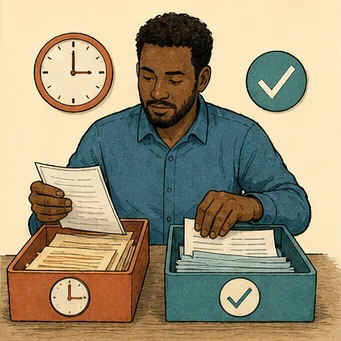
The secret to a long-term career as a funded trader is not in finding a single big win. It is in the monotony of a daily routine. Build a schedule around a limited set of trading setups that you know well. Every morning, review your risk parameters for the day. Every evening, spend 15 minutes reconciling your statements and updating your journal. These small, repetitive actions build the psychological resilience needed to stay in the game for months and years.
After every payout request, take a step back and perform an honest review. Ask yourself if your risk concentration and execution remained strictly within your plan. Use these results to refine your operations. Recognize that trading outcomes are never guaranteed. The market does not care that you passed an evaluation or that you are waiting for a payout. It will move regardless of your status. Your only edge is your ability to adapt your plan to the reality of the market.
Treat your funded account as a professional asset. If you find that your routine is constantly interrupted or that you are feeling stressed by the pressure to produce, it might be a sign that you are over-leveraging. A sustainable routine should feel quiet and focused, not chaotic and urgent. When your process is working, you will find that the payout is just a natural byproduct of your day-to-day discipline, rather than the primary reason you are sitting at your desk.
Consider a trader who creates a weekly ritual. On Sundays, they review the market schedule for any major events that might impact their strategy. They adjust their risk settings for the week accordingly. On Fridays, they export their statements, compare their platform logs to the dashboard, and write a summary of their performance. This keeps them grounded. They are not chasing the next big win. They are simply operating their strategy, measuring their performance, and keeping their account safe and compliant.
Making Strategic Decisions
When you are finally at the stage where you are requesting multiple payouts, it is easy to become complacent. You might think you have cracked the code. However, the firm is constantly reviewing performance data. Your continued eligibility often depends on maintaining the same risk profile you had at the start. If your performance suddenly deviates or becomes much more aggressive, you might trigger an internal audit that leads to a closer look at your trading history. Always prioritize stability over sudden spikes in activity.
Consider the role of your strategy in your long-term plan. If your edge is highly specific to a certain market condition, recognize when that condition has ended. Trying to force a strategy into a market that no longer supports it is a common cause of failure in funded accounts. It is better to have a slow month with small losses than to force a trade that leads to a drawdown breach. Professional traders know when to stay on the sidelines and wait for their setup to reappear.
Your decision-making process must remain objective. If you find your emotions tied to a specific payout amount, you are at risk. Separate the money in your mind from your trading decisions. The goal is to follow your rules, not to pay a specific bill or buy something with the money. If you have an emotional attachment to the funds in the account, you will eventually make a mistake. Keep your focus on the process, and the outcomes will take care of themselves over time.

Related guide for Prop Firm Payout Readiness: What to Do After You Pass: For the next practical part of your preparation, continue with Prop Firm Passing Service Review 2026: What to Check Before Choosing One. This review framework focuses on the details that decide whether a passing service is useful: risk controls, communication, rule awareness, transparency, and funded-stage support.
Managing the Psychological Load
Trading with someone else's capital carries a different level of psychological weight than trading your own. The pressure of knowing that a single bad day could end your access to the account can be significant. Acknowledge this stress instead of ignoring it. Use physical breaks to manage your focus. Do not sit at the screen for 8 hours straight. Your brain needs time to disconnect and recover after intense periods of market analysis.
Maintain a healthy distance from your trading performance. Do not equate your self-worth with your equity curve. If you have a bad week, it is not a reflection of your intelligence or your potential as a trader. It is simply a data point that suggests you need to review your strategy or your risk management. Use this information to improve. Resilience in the face of temporary setbacks is what allows you to handle the long-term demands of this work.
Build a support structure outside of the trading world. Talk to people who do not trade. Engage in hobbies that have nothing to do with the markets. This helps you keep a balanced perspective. When you return to the screen, you will be fresher and more capable of making clear-headed decisions. Your ability to think clearly is your most valuable tool as a trader. Protect it, nourish it, and do not let the market consume your life.
The Compliance Mindset
View compliance not as a burden but as a fundamental component of your work. Every rule exists to manage risk. When you follow the rules, you are protecting the integrity of the firm's capital, which in turn protects your access to that capital. If you find a rule that you think is unfair, don't try to find a workaround. Instead, accept the limitation as a constraint within which you must operate. Adapting to constraints is a core skill for any professional.
Stay updated on any changes to the firm's terms of service. Most firms send out newsletters or notifications when they update their rules. Don't archive these emails without reading them. A change in a margin requirement or a holiday trading schedule could have a direct impact on your strategy. Being proactive about these updates ensures that you are never caught off guard. This is the difference between an amateur and a professional operator.
Always keep a clear, audited paper trail of your actions. If you ever have a concern about a trade or a rule interpretation, email the support desk and get a response. This documentation serves as your defense if a dispute ever arises. By operating in a way that is always ready for an audit, you gain peace of mind. You don't have to worry about what the firm might find, because you know your records are accurate and complete.

Assessing Your Progress
Take a moment at the end of every quarter to assess your progress. Have you achieved your goals? Have you maintained your discipline? Are there areas where you need to improve? Look at your stats. Are you becoming more efficient with your risk? Are you spending less time on trades that don't meet your criteria? Use this assessment to plan for the next quarter. Setting milestones for your own development helps keep you motivated and focused on the long term.
Be honest with yourself about your weaknesses. Everyone has them. Maybe you struggle with FOMO, or perhaps you tend to hold onto losing trades for too long. Identifying these tendencies is the first step toward fixing them. Don't hide your mistakes from your own analysis. Use them as case studies to prevent future occurrences. The more you learn from your own performance data, the better you will get over time. There is no shortcut to this level of self-awareness.
Celebrate the process, not just the result. When you consistently follow your plan, regardless of the financial outcome, that is a success. You are building the habits that lead to sustainability. The money will follow if you keep doing the right things day after day. Trust the process, maintain your records, and keep your risk management in place. This is how you build a real career as a trader, regardless of the platform or the firm you choose.
Final Takeaway
A payout is better treated as evidence that your process and the program's current conditions aligned for a period. It is not proof that larger risk is now justified. Success comes from the dull, consistent application of your strategy over time, not from singular events or lucky trades.
Prepare the paperwork, the risk plan, and your internal administrative routine well before the request date. That leaves your mental energy available for disciplined execution rather than last-minute stress or administrative errors. Stay clear-headed, keep your records spotless, and treat the account with the care that an professional asset requires. You are the architect of your own stability.