
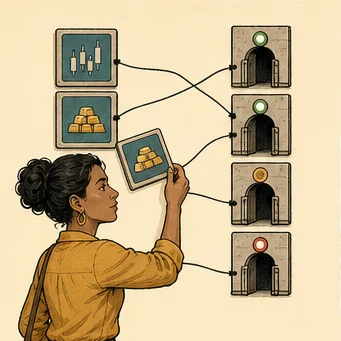
A challenge trading plan is a set of pre-committed decisions for the moments when a chart is moving quickly. It should define what earns a trade, what invalidates it, and how much account room can be used before the day is over. [L4]
The best plan is small enough to execute without interpretation. It does not forecast every outcome. It limits the cost of being wrong and makes a no-trade day a valid result. [L5]
When you interact with a funded firm, your ability to stick to these rules determines your outcome. A written plan acts as a guardrail. Without it, you are likely to overtrade when the market gets busy. This guide provides a framework to keep you disciplined.
This is not about finding a magic strategy. It is about consistent application of simple rules. You must treat your account like a business asset. Every trade involves risk that the firm expects you to manage. If you cannot manage risk, you cannot maintain an account. Build a plan that keeps you in the game for the long haul.
Readers building a complete challenge plan can pair this review of the prop firm challenge trading plan: a day-by-day framework with the prop firm passing service guide, which compares the wider support process and its limits.
What the Plan Is Supposed to Do
A plan narrows decisions before price starts moving. It defines eligible setups, risk, session boundaries, and the conditions that make standing aside the correct action. [L11]
Keep it short enough to consult at the order ticket. A plan that requires interpretation under pressure is a wish list, not an execution control. [L12]
When prices jump, your brain naturally looks for patterns that aren't there. A good plan stops you from guessing. It turns complex market movements into simple binary choices. You either have a setup or you do not.
Consider a hypothetical example. You see a quick spike in price. Without a plan, you might chase it because you fear missing out. With a plan, you check your rules. If your specific setup requires a pullback first, you stay out. You save your account from a bad trade. This prevents emotional responses.
Think of your plan as a flight manual. Pilots do not decide how to handle a stall while it is happening. They rely on established procedures. You must do the same. If you have to think too hard, you have already lost control. Clarity is your greatest asset in a volatile market environment.
Before the Market Opens
Preparation starts with account room and the event calendar, then moves to levels and scenarios. Check the firm's server time, open positions, and restrictions before chart analysis. [L24]
Write one bullish, bearish, and neutral scenario without predicting which must occur. This prevents a first opinion from becoming a reason to force an entry. [L25]
Set your desk up for success long before the opening bell rings. Look at the economic calendar for the day. High-impact news can render your technical levels useless in seconds. If a major release is coming, note the time. Make sure you are not in a position when that data hits.
Check your account status. Many firms enforce strict daily drawdown limits. If you are close to that limit, your goal for the day is not to make money. It is to protect your remaining capital. A failure case happens when a trader ignores their drawdown state. They think they can earn their way out of a slump. Usually, they just hit the limit faster.
Review your open positions from yesterday. Are there any carry-over risks? Ensure your platform settings are correct for the current session. Small technical details matter when you are trying to execute quickly. You do not want to be fumbling with settings when your setup arrives.
Define the Setups
A usable setup specifies context, trigger, entry location, invalidation, and target or exit logic. It also identifies the condition that cancels the idea before entry. [L32]
If the stop is arbitrary or the expected reward does not justify the transaction cost, skip it. Clear definitions allow later review of execution rather than memory. [L33]
Be specific about what you trade. A general idea like "buying breakouts" is not a plan. It is a concept. You need to know exactly what a valid breakout looks like. Where does the price go? What does the volume do? Does the bar close a certain way?
Define your invalidation level clearly. If the trade does not work, where is the proof that you were wrong? That is your stop. If you do not know where to place the stop, you have no business taking the trade. Never take a trade where the risk is hidden or unknown.
Establish your profit targets. Do you exit at the next major level or do you trail the stop? Decide this while the market is quiet. If you wait until you have a profit to decide when to exit, greed will interfere. You will likely hold too long, turning a winning trade into a loser.

Set the Risk Budget
Divide practical daily room into small risk units and reserve capacity for costs and mistakes. The budget should survive more than one losing trade without approaching the firm's hard threshold. [L40]
Recalculate after every closed trade and after any open exposure changes. Do not treat a profitable morning as permission to ignore the original daily ceiling. [L41]
Risk management is the core of any professional trading effort. If your account allows a $2,000 loss before the firm closes the account, do not risk $500 on one trade. That only gives you four chances to fail before the challenge is over.
Use smaller units. Perhaps risk $100 or $200 per trade. This lets you weather a bad day without losing the account. A hypothetical example illustrates this well. If you have $10,000 of room, risking $200 means you can lose 50 times before hitting your limit. That is a massive buffer for a single session.
Never increase your risk because you feel confident. Confidence often comes after a win. Markets do not care about your winning streak. They can change direction instantly. Keep your risk size consistent regardless of whether you are winning or losing. Consistency is how you survive the variance of the market.
Session and Execution Rules
Session rules limit when and how often decisions are made. Define trading hours, maximum attempts, spread conditions, and the response to a platform or data problem. [L48]
Stopping after an execution error is often prudent because the next trade may be driven by frustration. Resume only after the error is recorded and the account state is checked. [L49]
Define the times when you are active. Many traders find that volume peaks around the opening and closing hours. If your strategy works best during those times, do not try to trade in the slow middle of the day. You will likely just bleed money through commissions and bad entries.
Set a hard stop for your trading day. If you reach your loss limit, stop immediately. Close the platform. Turn off the computer. Do not attempt to make the money back. Trying to recover losses is a classic mistake. It is how most traders blow their accounts in a single session.
Handle technical failures calmly. If your internet connection drops or the data feed hangs, do not panic. Call the firm if you have open positions. Do not try to trade through a shaky connection. It is better to miss a profitable opportunity than to be stuck in a trade you cannot manage due to a technical error.
Managing the Emotional State
Trading requires a detached mindset. You are a service provider for the market. You are not fighting the market, and you are not proving anything to anyone. If you feel angry or excited, you are not ready to trade. These emotions signal that your perspective has shifted toward outcomes instead of processes.
Create a pre-session ritual. Perhaps you spend 10 minutes breathing deeply or walking away from your screens. This helps you clear your mind. When you approach the chart, you should feel calm and observant. If you find yourself checking the balance every few minutes, you are focusing on the money, not the trade.
Accept that losses are normal. A loss is just a business expense. It is the cost of doing business. If you treat a loss like a personal failing, you will become defensive. You will start taking bad trades to prove you are right. That is a downward spiral that ends with a closed account.
Practice being bored. Professional trading is often quite dull. You spend most of your time watching and waiting. If you find yourself hunting for action, you are in trouble. Action is not income. Disciplined waiting is what keeps your account alive. Reward yourself for not trading when no clear signal exists.

Related guide for The Prop Firm Challenge Trading Plan: A Day-by-Day Framework: A useful companion for this decision is The Complete Prop Firm Challenge Preparation Guide. Preparation is where most of the controllable work happens. Use this complete checklist before you buy an evaluation or ask for passing support.
The End-of-Day Review
End-of-day review should compare planned and actual behavior, not celebrate or punish the result. A losing trade can be well executed, while a winner can conceal a rule breach. [L56]
Record one change only when repeated evidence supports it. This protects the plan from being rewritten around a single unusual session. [L57]
Review your journal daily. Look at your trade logs. Did you follow the plan? Did you enter when the setup appeared? Did you exit when the rules dictated? If the answer is yes, then the trade was successful, even if it resulted in a loss.
Identify where you deviated from the plan. Why did you do it? Were you bored? Did you ignore a signal? This is where your real learning happens. You cannot fix what you do not track. Be honest in your review. No one else is looking at this but you.
Do not change your plan based on one bad day. If you have a strategy that has worked for months, do not throw it out because of one outlier session. Markets move in cycles. Sometimes the conditions change, and that is fine. Focus on your long term consistency, not the volatility of one afternoon.
What to Do During a Losing Streak
A losing streak is information about current results, not proof that every rule should change. First check whether losses were valid examples of the same setup and normal risk. [L69]
Reduce size or pause while reviewing a meaningful sample. Adding frequency or switching markets to recover usually makes the evidence less useful. [L70]
Losing is part of the game. Even the best traders go through periods where they lose consistently. The key is how you handle it. If you lose, check your setup. Are the rules being met? If yes, keep trading your plan. The market will eventually cycle back to conditions that favor your setup.
If you lose, stop and take a break. Your decision-making capacity decreases when you are tired or frustrated. A quick walk around the block can reset your focus. Do not increase your risk to make up for losses. That is the quickest way to end your involvement with the firm. Stick to your baseline risk, no matter what.
Document everything during a streak. You might find that your setup works great in trend days but fails in range days. If you identify this, you can adjust your plan to avoid trading on range days. This is how you sharpen your edge. You learn what works and what does not by analyzing your losses.
Scaling and Long Term Growth
Growth happens through consistency, not luck. You do not need massive home runs to build a portfolio. You need steady, repeated execution. Every time you follow the plan, you are building confidence. You are proving that you can control your impulses.
Think about your career as a trader. You want to stay in the game for years, not days. Focus on survival first. If you survive, you can learn to thrive. Too many people burn out because they treat trading like a lottery. If you treat it like a career, you will behave differently.
Once you are consistently hitting your targets, you can slowly increase your size. But do this very carefully. Scaling up too fast is a major trap. It changes your psychological relationship with the risk. If you cannot handle a $200 loss comfortably, you certainly cannot handle a $2,000 loss.
Build your size only when you have a proven record over several months. You need a large sample size of trades before you can say your edge is truly robust. Do not get ahead of yourself. Be patient. Success in this business is a marathon, not a sprint.

Using a Passing Service With the Plan
Support is useful when it makes the plan visible through reminders, calculations, and review. It becomes dangerous when it substitutes urgency or unexplained trade instructions for a trader's informed approval. [L77]
Agree on communication, rule checks, and escalation before the account begins. The trader remains responsible for whether any service model is permitted and acceptable. [L78]
Remember that the firm is a partner, not a mentor. They provide the platform and the rules, but you are the person pressing the buttons. You must be the one who understands the risks. If a service promises you easy money, be very skeptical. There is no easy path in this industry.
Check your contract carefully. Know what is expected of you. Are there specific requirements for reporting or risk thresholds? Make sure your daily routine incorporates these requirements. Do not let the firm's administrative needs become an afterthought. Build them into your plan.
Be wary of outside advice. Everyone on the internet has a system that works. Most of them do not. Trust your own data. Trust your own experience. If you have a plan that works for you, stick to it. Do not let someone else's opinion derail your progress. Stay focused on your own execution.
Building a Robust Daily Routine
Your routine should be predictable and repeatable. Start at the same time each day. Follow the same steps. Consistency in your routine leads to consistency in your trading. It takes away the need to decide what to do every morning. You just follow the steps you have already decided are best.
Keep your workspace minimal. Too many screens and flashing lights can distract you. Focus on the price action. You do not need five different indicators to tell you where the market is going. You just need to see the price and the volume. Simplicity is usually better than complexity.
Review your performance data weekly. Look at the metrics beyond just profit and loss. How many trades did you take? What was your average win compared to your average loss? These numbers tell a story. If your win rate is low, perhaps your entries are too loose. If your losses are too large, perhaps your stops are poorly placed.
Use your data to iterate on your plan. Small adjustments are much better than massive overhauls. Maybe you decide to filter out certain setups during high volatility. Maybe you refine your exit strategy. Whatever you change, make sure it is based on evidence from your own trading history, not someone else's.
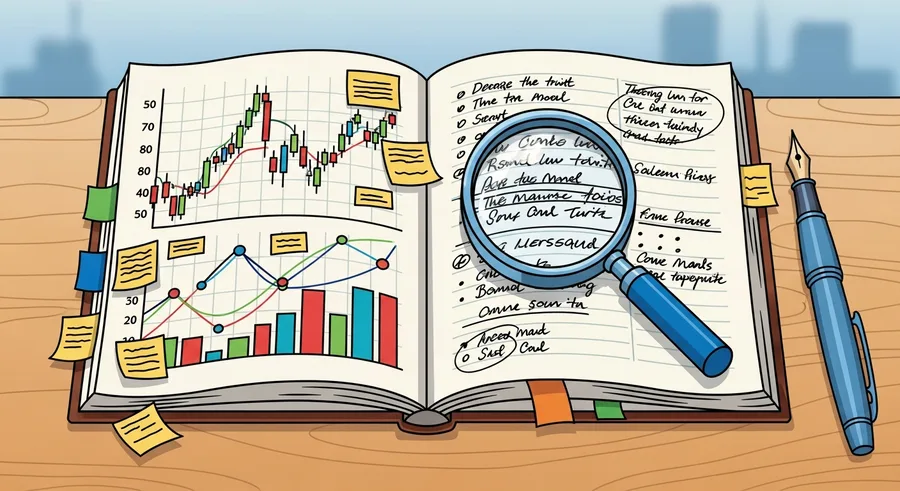
Related guide for The Prop Firm Challenge Trading Plan: A Day-by-Day Framework: For the next practical part of your preparation, continue with Position Sizing for Prop Firm Challenges: Protect the Drawdown Buffer. Position size is the bridge between a trading idea and a surviving evaluation. Learn how to size for the stop, the account rules, and the real risk of correlated exposure.
Staying the Course
Trading requires patience and a long term view. You will have days where the market does not offer any opportunities. That is perfectly fine. You don't get paid for activity. You get paid for taking high-quality, planned trades. If there is nothing there, then standing aside is the correct choice.
Do not let the excitement of the market pull you into bad decisions. Remind yourself that your account is a business. You are the manager. Your job is to keep the business running by controlling expenses and identifying opportunities. If you stay disciplined, the results will follow over time.
Every session is a chance to sharpen your skills. Keep your plan at hand. Consult it whenever you feel the urge to deviate. You are the only person responsible for your account. Make sure you are treating it with the care that it requires. Stay consistent and keep moving forward.
Refining Execution Logic
Execution logic is the bridge between a setup and an entry. It dictates the exact price or condition needed to commit capital. Most traders fail because they rely on visual confirmation that is too loose. A price level on a chart is just a number. It becomes a trade when a specific reaction happens at that level. You must define this reaction with hard constraints. Do not allow for visual estimation.
Consider a hypothetical example for a breakout strategy. You might define the entry as a 5-minute candle closing above a key resistance level. If the candle spikes above the level but closes below it, you do not enter. This rule saves you from false breakouts that trap traders in bad positions. It creates a binary state where the entry either meets the criteria or it does not.
Include rules for slippage and spread in your execution logic. In fast-moving markets, the price you see is not always the price you get. Set a limit for how much slippage you will accept before cancelling the entry. If the market is moving too quickly to fill your order at the target price, walk away. Entering a trade at a bad price changes the risk to reward ratio significantly.
Refine your execution logic
Document your execution success in a separate log. Note the difference between your planned entry and your actual fill price. Over time, this data reveals if your platform or strategy is prone to hidden costs. If your average fill price is consistently worse than your planned price, adjust your target levels. This adjustment keeps your expected value calculations accurate and grounded in reality.
Do not allow for manual overrides once the trade is active. Your plan should dictate the exit rules entirely. If you find yourself manually closing trades because of nerves, your stop loss is too wide. Tighten your initial risk parameters rather than relying on gut feelings. A system that requires manual intervention during the trade is prone to emotional bias.
Scenario Stress Testing
Stress testing involves looking at your plan through the lens of extreme market conditions. Ask what happens to your account if your three most common setups fail in a row. If a triple loss puts your account in danger of hitting a drawdown limit, your risk units are too high. You must adjust your position size until three consecutive losses are manageable.
Perform a hypothetical example calculation. Suppose your daily loss limit is $1,000. If you risk $400 per trade, three losses equal $1,200, which exceeds your total limit. You have effectively made it impossible to survive a bad morning. Lowering your risk to $200 per trade means three losses total $600. You stay in the game and have $400 of room remaining for later in the day.
Evaluate how your strategy handles gaps in price. Markets can jump between levels when news occurs. If your stop loss is set at a specific price, a gap might cause you to be filled much further away. Build an emergency exit rule for these events. If the price gaps past your stop, close the position immediately at the market price. Do not wait for a bounce to recover the loss.
Simulate stress testing scenarios
Stress testing also covers your own behavior. Think about how you respond to fatigue. If you have been trading for 3 hours, your reaction time slows down. Note this in your plan. If your performance stats show more errors after the 3 hour mark, make it a rule to close the platform. This creates a logical barrier to overtrading when you are mentally drained.
Use historical charts to simulate these scenarios. Go back to a day with high volatility and walk through your plan. Pretend you took every setup. See where your stop would have been hit. See if you would have stayed under your drawdown limits. This exercise confirms if your plan is built for reality or just for quiet market conditions.
Capital Preservation Mechanics
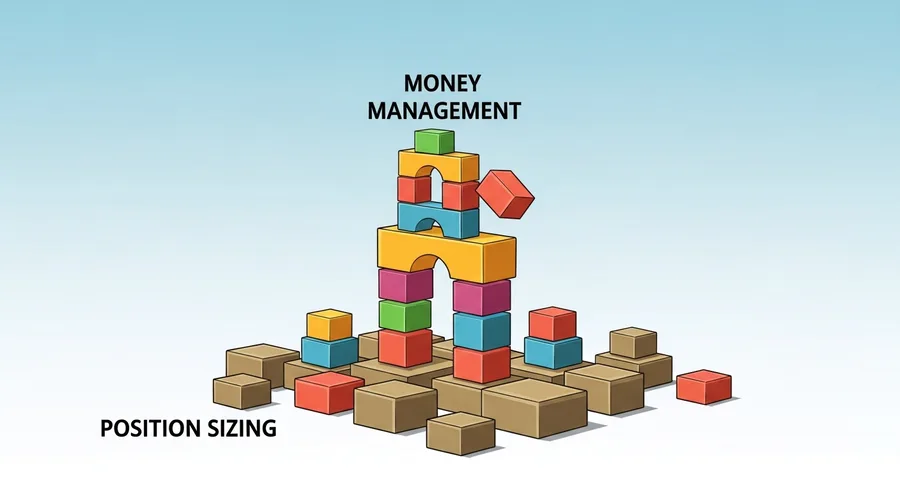
Capital preservation is about limiting the impact of variance. Most traders view profit as the primary goal, but professional traders view capital retention as the priority. If you do not have an account, you cannot make money. Every rule in your plan should aim to keep the account active for as long as possible. High-frequency trading often kills accounts because of the accumulation of minor losses.
Implement a soft stop on daily volume. Many firms do not have a hard rule on how many trades you can take, but you should. A hypothetical example would be a limit of 4 trades per day. After 4 trades, you stop regardless of whether you are up or down. This forces you to select only the highest quality setups. It prevents the urge to fix a losing day by forcing more trades.
Separate your capital into tiers. Allocate a small percentage of your daily risk to experimental setups. If you have a primary strategy, do not let an experimental trade take up the same risk budget. Keep your core capital in the strategies you know and trust. Use the experimental portion only when your account is in a profit buffer.
Manage capital preservation mechanics
Account for commission and data costs in your risk budget. Many traders ignore these fees until they see the end-of-month report. If your strategy relies on frequent entries, these costs add up quickly. A trade that seems profitable on the chart might be a loser after commissions are subtracted. Always include these costs in your risk evaluation before entering a position.
Use a drawdown tracker to stay aware of your situation. Do not just watch the account balance. Watch the distance to your maximum drawdown limit. If your balance drops to within 20% of your limit, trigger a state of absolute caution. In this state, reduce your risk per trade by half. This change protects the remaining capital and gives you more room to find a winning trade.
Defining Decision Boundaries
Decision boundaries define the environments where your plan applies and where it does not. Not every market movement is tradeable. If the price is moving in a way that your setup does not cover, you are not missing out. You are protecting your capital from an environment where your edge does not exist. Define these boundaries clearly.
Consider a hypothetical example about market type. If your strategy is a trend following system, you need a clear direction. On a day where the market is just moving sideways in a tight range, your trend following signals will likely fail. Explicitly state in your plan that you will not trade on range days. When the range exceeds a certain width, the market is invalid for your system.
Define time-based boundaries. Some traders find they are highly effective at the market open but lose money in the final hour. Analyze your data to see if you have a specific window of profitability. If your data shows a clear drop in performance after 2 in the afternoon, remove that time from your active trading schedule. This is a simple, evidence-based decision.
Define trading decision boundaries
Include a boundary for volatility. Some strategies perform poorly during high-impact news releases. If your technical levels are constantly breached during news events, add a news filter. State that you will not place any trades 15 minutes before or after a major report. This removes the randomness of news-driven price spikes from your performance history.
Finally, create a boundary for your mental state. If you have had a difficult morning or a personal distraction, mark your trading day as closed before it even begins. Trading is a high-stakes activity that demands total focus. If your attention is elsewhere, you are not trading; you are just gambling. Respect the boundaries of your own focus to ensure you always perform at your best.
Final Takeaway
Print or pin the plan beside the order ticket. If a proposed trade has no defined stop, no remaining risk budget, or conflicts with an event rule, it is not a planned trade. [L84]
Refine the plan only in scheduled reviews. Changes made after a loss often disguise a recovery impulse as research; changes supported by a journal can be tested at reduced risk. [L85]
Your plan should be your primary guide. It keeps you from overreacting to daily noise. By following these steps and keeping your risk in check, you give yourself the best possible chance to succeed. Trust your process and keep your eyes on the long term goal.