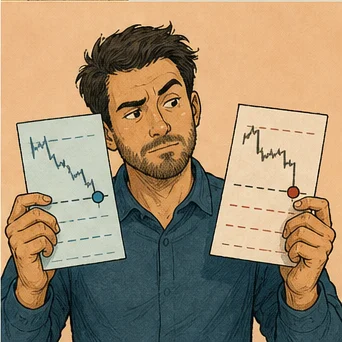
Slippage is the difference between an expected order price and an actual fill, and it can materially change cash risk in fast or thin markets. It cannot be removed by a checklist, but its effect can be measured, anticipated, and limited.
For a challenge account, treat execution uncertainty as part of the risk plan. The relevant question is not whether a chart showed a price, but whether the stop, size, spread, and likely fill still leave the account inside personal and firm limits.
For the broader service-selection and evaluation framework, use the prop firm passing service guide alongside this focused review of slippage management for prop firm challenges.
Measure Your Actual Slippage
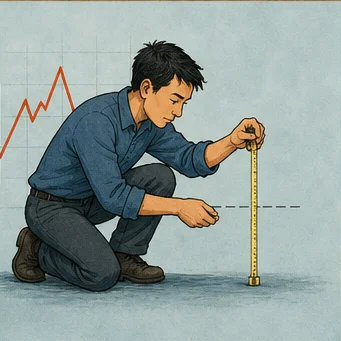
Record intended price, order type, fill price, stop, spread, time, and market condition for each trade. Separate entry and exit slippage because a stop during a fast move has different behaviour from a limit entry in normal liquidity.
Review a sample by instrument and session. Averages alone can hide occasional severe fills, so note the largest adverse examples and whether they clustered around events, rollovers, or connection problems.
Think of this tracking as a standard business audit. You need to know your true costs to see if your strategy is viable. If you only look at profit targets, you miss the reality of execution costs. Tracking gives you facts rather than assumptions. Use a simple spreadsheet to log these details daily. Over time, patterns will emerge that help you refine your approach. If you notice specific times of day consistently lead to poor fills, you can adjust your trading hours. This data-driven approach removes emotion from the process.
Consider an illustrative example. Suppose you aim to enter a trade at 100.05, but you get filled at 100.08 due to rapid momentum. That 3-point difference is your slippage. If your intended stop was 99.95, your actual risk is now 13 points instead of 10. By recording this, you realize that your 10-point risk model is inaccurate. You then adjust your position size to account for a 13-point reality. This change preserves your capital and keeps you within your firm's loss limits. It is a simple but effective way to handle reality.
Refining your record-keeping requires consistency. Do not skip days even if trading is quiet. Those quiet days provide the baseline against which you compare volatile periods. When you see a major deviation, you can immediately tell if it was caused by an external event or your own platform settings. This diagnostic clarity is the primary benefit of strict measurement. It transforms an unpredictable event into a manageable variable that you can account for in your future trade planning.
Keep your focus on the worst-case fills rather than just the average. If you have 99 trades with minimal slippage and 1 trade with a huge gap, the average will hide the danger. That 1 trade is the one that could cause you to fail your challenge account. Analyze those outliers carefully. Determine if they were avoidable by choosing different instruments or sessions. If they were unavoidable, your risk management must assume they will happen again at some point. Prepare for the possibility of extreme deviation.
Finally, ensure that you categorize your slippage by market conditions. Differentiate between times of high liquidity and thin, quiet markets. You might find that your strategy performs well in one environment but suffers significantly in another. This distinction is vital for long-term consistency. By separating these conditions, you gain insight into where your strategy thrives and where it faces undue execution risks. Use this information to tailor your market participation. Do not try to force a strategy into an environment where it constantly underperforms due to poor fills.
- Log expected and filled prices.
- Separate entries from exits.
- Tag session and event context.
- Review worst adverse fills.
Trade Where Liquidity Supports the Plan
Prefer the sessions and instruments in which the strategy was tested and quoted conditions are normally stable. Liquidity can change quickly, so a familiar market is not a guarantee of a narrow spread or orderly fills.
Avoid assuming that visible movement equals tradable opportunity. A rapid move with widening spreads may make the effective stop and target substantially different from the chart pattern.
Liquidity is the fuel for your trading strategy. Without it, your orders cannot be filled at your desired price. Many traders get caught by surprise when they attempt to trade during low-liquidity periods, such as bank holidays or late-session lulls. During these times, the order book becomes thin. A relatively small order can cause a significant price swing. This volatility makes it almost impossible to predict your actual entry or exit price, leading to massive slippage that disrupts your risk calculations.
Focus on markets with deep order books during their most active hours. Deep liquidity means that there are many buyers and sellers at every price level. This depth acts as a shock absorber. If you place a reasonable size order, the market can absorb it without drastically moving the price against you. Compare this to thin markets where even a small order can move the needle. Always check the volume indicators before you commit your capital. If volume is low, it is usually wise to wait for more active periods.
Consider the role of market makers in providing liquidity. They are the ones providing the other side of your trades. When market conditions become extreme, these participants might widen their spreads to protect themselves. This widened spread is a direct cost to you. If you trade during these times, you are effectively paying a premium for the privilege of executing your trade. It often makes sense to avoid these periods entirely unless your strategy is specifically designed to capitalize on extreme volatility, which most retail strategies are not.
Assess the liquidity of an instrument before you add it to your watch list. Not every ticker is suitable for every strategy. Some instruments are prone to sudden liquidity dry-ups. Test your strategy against these instruments to see how they behave under stress. If you notice that slippage is consistently higher than your average, consider removing that instrument from your portfolio. Your goal is to maximize your probability of success, and that means trading in environments that provide the most consistent and predictable execution conditions available.
Always keep an eye on changing market dynamics. A market that is liquid today may not be liquid tomorrow. Global events, news cycles, and shifting economic conditions can fundamentally alter the landscape for any given asset. Stay informed about the broader context in which you operate. By staying flexible, you can shift your focus to more stable environments as needed. Never fall in love with a specific instrument if it no longer provides the liquidity required for your trading plan to function properly and profitably.
Choose Order Types Deliberately
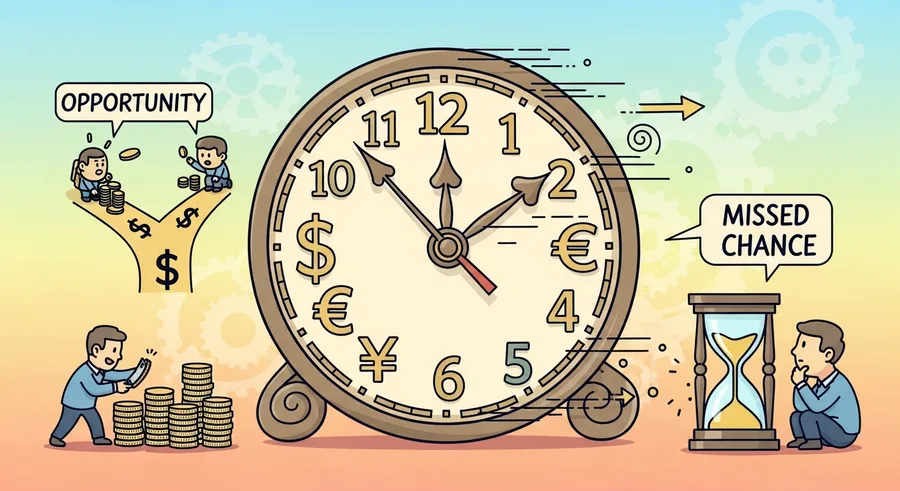
Market orders prioritize execution but do not promise the displayed price; limit orders control a worst acceptable entry but may not fill. Stop orders can activate in volatile conditions where the eventual fill differs from the trigger.
Choose the order type before the signal, based on how the setup was tested. Changing to a market order after price runs away is often an emotional decision rather than an execution improvement.
Every order type serves a specific purpose, and picking the right one is part of your professional duty. When you use a market order, you are essentially telling the exchange that you want the position now, regardless of the price. This is useful for momentum entries where missing the move is a larger risk than the slippage cost. However, it exposes you to the most slippage if the market is moving quickly or if the order book is thin. Use this type sparingly.
Limit orders offer more control, but they come with the risk of no execution. When you set a limit price, you are setting a boundary on your risk and reward. If the price moves away from you before your order is reached, you will simply not get in. This can feel frustrating, but it is better than being filled at a bad price. You avoid the hidden cost of adverse slippage. This approach requires discipline, as it means sometimes passing up a trade entirely.
Stop orders are essential for managing existing risk, but they are not guarantees. A stop order effectively turns into a market order as soon as your trigger price is hit. In a fast-moving market, price can gap past your stop price before your order is processed. This is known as a gap fill. It is a common reality in many markets. Do not rely solely on your stop order to define your loss. You must account for the possibility of a worse-than-expected exit price.
Practice using different order types in a demo account to see how they perform under various conditions. Observe the difference between your target price and your actual fill. This practice will give you a clear sense of which order types are most appropriate for your specific strategy and risk tolerance. Do not wait until you are in the middle of a live challenge account to experiment. Your execution strategy should be a well-rehearsed plan that you execute without hesitation when the signal appears on your charts.
Be wary of changing your order type on the fly due to impatience. If your trading plan calls for a limit entry, stick to it. If you suddenly switch to a market order because you fear missing out, you are trading based on emotion, not on your tested process. These impulsive decisions are one of the most common causes of account failure. Stick to your predefined rules for every single trade. Reliability in your process is what helps you maintain your account standing over the long term.

Related guide for Slippage Management for Prop Firm Challenges: A useful companion for this decision is Can You Trade News During a Prop Firm Challenge?. News permission depends on the program and account stage. Use this guide to check windows, manage open risk, and avoid assumptions in fast markets.
Build an Execution Allowance Into Size
Size from the distance to the protective stop plus a reasonable allowance for spread and adverse execution observed in comparable conditions. This is a buffer, not a claim that a maximum loss is knowable in every market event.
If the account's remaining room cannot absorb that uncertainty, reduce the position or skip the trade. A nominal stop loss does not guarantee a fixed cash loss when prices gap.
Calculating your position size is one of the most important aspects of risk management. Most traders focus only on the distance to their stop. They ignore the potential for slippage. If you calculate your size based on a tight stop, you might find that the extra slippage at the point of exit causes your total loss to exceed your risk tolerance. This is why you must build an execution allowance into your initial sizing calculation. It provides a safety net that protects your account.
Think of this as a margin of error. If you are comfortable risking 1% of your account, size your position so that even with a reasonable amount of slippage, you do not lose more than that amount. For example, if your stop is 10 points away and you expect potential slippage of 2 points, calculate your size based on a 12-point loss. This ensures that you stay within your limits, even if the trade goes against you in a volatile manner. It is a simple, conservative, and effective approach.
Do not overcomplicate your sizing. Stick to a simple formula that takes into account your stop distance and your observed slippage. Once you have calculated your maximum allowable size, do not exceed it. It is always better to trade smaller than you think you need to. Over-leveraging is the fastest way to blow out a challenge account. By keeping your size modest, you give yourself the room to make mistakes without jeopardizing your overall objective. Remember, your goal is survival, not quick riches.
If your calculated size is too small to be meaningful for your account, it might mean that your stop is too wide for your strategy or that the instrument is too volatile. Re-evaluate your strategy rather than trying to force a larger position size. If you cannot make your strategy work with conservative sizing, it may simply not be suitable for your current account constraints. There is no shame in passing on a trade that does not fit your risk model. Being selective is a sign of a professional trader.
Consider how your size affects your psychology. When you trade with a size that is comfortable, you are more likely to stick to your plan. When you are over-leveraged, every tick against you feels like a disaster. This emotional stress leads to poor decision-making. You might close a trade too early or panic-sell at the wrong time. By keeping your position sizes conservative, you maintain a clearer head, which is essential for consistent performance. Size matters, but not just for your profit; it matters for your mental state.
Respect Scheduled News Risk
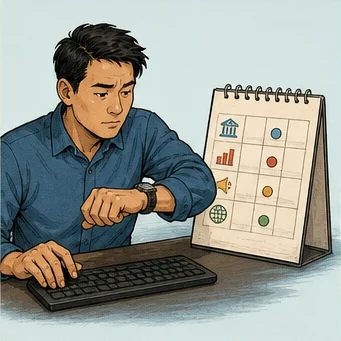
Check the economic calendar and the firm's restrictions before the session. Even where trading is allowed, releases can create gaps, rejected modifications, widened spreads, and fills outside the assumptions used for ordinary trades.
Do not solve news risk by moving a stop farther after entry. Decide in advance whether the strategy exits, avoids new positions, or accepts only exposure that remains sensible through the event.
Scheduled news events are major drivers of volatility. When data like unemployment figures or central bank interest rate decisions are released, the market can react instantly. These reactions often cause massive price gaps. A stop order sitting at a specific level might be bypassed completely, leading to an exit price far worse than you anticipated. This is why it is often safer to be on the sidelines during major news events. The risk is simply too high for most strategies to manage effectively.
Check the economic calendar daily. Know when major announcements are scheduled. If you have open positions, decide in advance how you will handle them. Will you close them before the announcement? Will you move your stops to break-even? Whatever your decision, make it before the news is released. Do not wait until the volatility starts. Once the market reacts, it is often too late to make an informed decision. Having a pre-planned course of action is key to managing news risk effectively.
Be aware of how news affects different instruments. Some assets are more sensitive to certain types of news than others. For example, interest rate news might have a huge impact on currencies, while employment data might move equity indices more significantly. Research these correlations and build them into your trading plan. If you are holding an instrument that is particularly sensitive to an upcoming announcement, consider reducing your position size well before the scheduled time. It is a proactive step that protects your capital.
Some firms have specific rules about trading during news events. Always read these rules carefully and follow them to the letter. Violating these rules can lead to account termination, which is a risk that you absolutely cannot afford. If the firm restricts trading around certain news events, do not try to find a workaround. Just stay out of the market during those windows. It is a small price to pay to keep your account open and your opportunity alive. Compliance is part of your professional responsibility.
Do not try to play the news by guessing the outcome. Even if you predict the news correctly, the market reaction can be unpredictable. Prices often move in the opposite direction of what the news might suggest, or they can whipsaw in both directions before settling. This makes news trading more akin to gambling than to disciplined trading. If you are not a professional news trader, it is almost always safer to avoid the volatility entirely. Keep your capital safe and focus on setups that provide a higher probability of success.
Remove Avoidable Technical Delay
Use a stable connection, keep the platform updated at a sensible time, and verify the intended symbol and volume before submitting. These steps cannot control market liquidity, but they can prevent self-created delay and duplicate orders.
Maintain a tested backup login on a secured device. During a disruption, first establish actual open exposure and pending orders before retrying instructions that may already have reached the server.
Technical failures are frustrating because they are usually avoidable. A lag in your internet connection or an outdated trading platform can turn a simple trade into a major headache. Ensure that your setup is optimized for speed and stability. Use a hardwired ethernet connection if possible, rather than relying on Wi-Fi, which can be susceptible to interference. These small details ensure that your order reaches the broker's server with minimal delay, which is critical during fast-moving market conditions.
Keep your trading platform updated, but choose a time to do it that does not interfere with your active trading hours. An unexpected update in the middle of a trading session can lock you out of your account exactly when you need to be active. Regularly check for updates on the weekend. This simple habit keeps your software running smoothly without risking downtime during critical moments. Treat your trading station like the mission-critical system it is. Reliability is your best ally in a high-stakes environment.
Double-check every detail before you click the button. Are you looking at the right symbol? Is your volume set correctly? A simple typo in your volume size can lead to a disastrous position that blows your account. It is worth the extra two seconds to verify your settings. Many platforms allow you to set templates for your orders. Using these templates can reduce the risk of manual input errors. It is a professional way to handle your execution process and minimize mistakes.
Prepare for the worst with your technology. What happens if your internet goes down? What if your computer crashes? Have a backup plan in place. This could be as simple as having the broker's mobile app installed on your phone with your login credentials ready. If your primary system goes down, you can quickly log in via your phone to check the status of your trades and close any positions if necessary. Knowing that you have a plan in place helps keep you calm during a crisis.
When a technical issue occurs, stay calm. Do not start clicking buttons randomly. First, try to assess your current situation. Check your account status from a different device if possible. See what positions are actually open and what orders are pending on the broker's server. Only then take action. Rushing into a panic-driven response often leads to making a minor problem much worse. By acting methodically and calmly, you can minimize the damage caused by a technical glitch and get back to your trading plan.

Related guide for Slippage Management for Prop Firm Challenges: For the next practical part of your preparation, continue with Prop Firm Challenge Position Size Calculator Guide. Calculate quantity from a valid stop and cash risk, then confirm that the whole idea fits available drawdown, contract specifications, and real execution.
Plan Stop Execution Honestly
A protective stop remains important even though its fill can be worse than its trigger. Its purpose is to define an exit process and reduce open-ended exposure, not to create certainty about price in every condition.
Place stops where the setup is invalidated, then select size that fits that distance. Tightening a stop solely to increase volume makes routine noise more likely to close the trade.
Your stop loss is your most important tool for managing risk, but you must understand its limitations. A stop loss does not mean you are immune to bad prices. It simply means that you have a predetermined point at which you will exit a failing trade. Even if you get a bad fill at that point, having the stop is still better than letting a loss spiral out of control. It is a boundary that prevents your losses from becoming catastrophic. Always treat your stop as non-negotiable.
Place your stops based on market structure, not based on an arbitrary dollar amount. If your strategy relies on a certain price level being held, place your stop just beyond that level. This way, if the price hits your stop, your thesis for the trade is proven wrong. This is the most logical way to place a stop. If you tighten your stop too much, you will be taken out of perfectly good trades by routine market noise. You need to give your trade enough room to breathe.
Understand that the further your stop is from your entry, the smaller your position size needs to be to maintain the same risk level. This trade-off is fundamental. You cannot have both a very tight stop and a very large position without taking on extreme risk. Find the balance that works for your strategy. Experiment with different stop placements in your testing to see what provides the best balance of win rate and reward-to-risk ratio. Remember that your goal is long-term consistency, not winning every single trade.
When the market hits your stop, accept the loss immediately and move on. Do not try to hold onto a losing trade in the hope that it will turn around. That kind of behavior leads to significant losses and often causes traders to fail their challenge accounts. Treat the loss as a cost of doing business. As long as your wins are larger than your losses over time, you will be successful. The stop loss is what makes this mathematical edge possible, so respect it at all times.
Regularly review your stop performance. Are you consistently getting hit by stop runs and then seeing the price move in your original direction? If so, you might need to adjust your stop placement or your entry timing. Don't be afraid to analyze your losses. They are the most valuable data points you have. By understanding why you hit your stops, you can refine your process and become a more effective trader. Always stay focused on the process, not on the individual trade result.

Adapt Only From Evidence
Change execution rules after a enough, comparable record shows a problem, such as recurring adverse fills during a certain session. One surprising trade may warrant investigation, not a wholesale change in method.
Keep the adjustment specific: avoid a time window, lower size, or use a different permitted order type. Rehearse the change before relying on it in an evaluation where possible.
Making changes to your strategy based on a single bad experience is a common mistake. You need a enough sample size of data to determine if a change is actually necessary. One bad fill might be just a bit of bad luck. Look for recurring patterns of poor performance. If you see that you consistently lose money during a certain market session, that is a pattern worth addressing. If it happens once in a while, it might just be the cost of doing business.
Be specific when you make adjustments. If you notice a recurring problem with slippage, try to solve it with a surgical change. Maybe you stop trading for an hour around news releases, or you reduce your size for a specific volatile instrument. Avoid making broad, sweeping changes to your entire methodology. The more you change, the more likely you are to break what was already working well. Small, iterative improvements are the hallmark of a disciplined and successful approach.
Rehearse your changes in a controlled environment before you deploy them in your live challenge. Use a simulator or a paper-trading account to test your new rules. Observe how they perform under live market conditions. This testing phase gives you confidence in your new approach and helps you iron out any unforeseen issues. It is the best way to ensure that your adjustments are truly effective. Never rely on theory alone; always back it up with a practical test, if at all possible.
Keep a detailed log of your adjustments and why you made them. This is an essential part of your professional development. Over time, this log will become a valuable history of your growth as a trader. You can refer back to it to see what worked, what did not, and how your thinking has evolved. It is an excellent way to maintain a long-term perspective, which is vital when you are managing a challenge account and dealing with the inevitable ups and downs of the market.
Remain patient and disciplined. Trading is a marathon, not a sprint. If your process is solid, you will eventually reach your goals. Do not let short-term frustration lead you to abandon a good plan. Keep your eyes on the data and let the facts guide your decisions. If you stay consistent with your process and continue to refine it based on evidence, you will increase your chances of success significantly. Your goal is to be a professional, not to be right on every single trade.
Final Takeaway
Slippage is a trading cost and risk variable, not proof that an account or strategy failed. Conservative size, liquid conditions, and accurate records make its impact more manageable.
Plan for imperfect fills before entry. Once an order is live, protecting the account matters more than trying to force the chart back to an expected price.