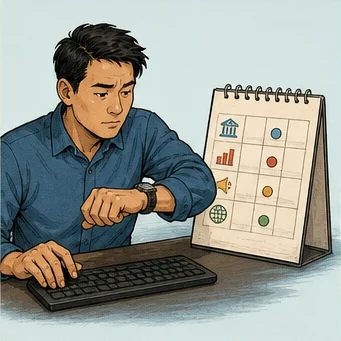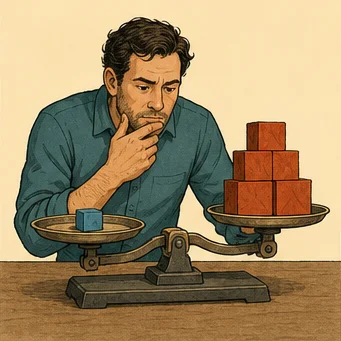

Swing trading in a prop firm challenge introduces specific constraints that differ significantly from intraday activity. You must account for overnight financing charges, the potential for weekend gaps, daily reset timing, margin requirements, and strict rules about holding positions through major events or market closures. Every firm operates under a unique framework, and you should never assume that general swing trading practices are automatically permitted within your specific account program.
A successful swing plan must be designed around adverse price movement that occurs while you are not at your screen. The method used by the firm to calculate drawdown, along with the very real risk of overnight gaps, matters just as much as the specific chart pattern that prompted your initial entry. Your goal is to construct a strategy that accounts for these structural limitations before you ever commit capital to a long-term position.
Readers building a complete challenge plan can pair this review of swing trading a prop firm challenge: rules and risk with the prop firm passing service guide, which compares the wider support process and its limits.
Confirm the Holding Permissions
Your first job is reading the rules about holding trades overnight, on weekends, or during holidays. Never assume these rules apply to everyone. Check if your specific plan stops you from holding certain trades. Look for limits based on the type of asset, your current account level, or big news events. A general mention of swing trading in an ad does not always cover every technical rule in the legal contract.
Check how the system handles open trades that stay open when a market closes. If there is a rule about market closures, find out what happens next. Does it force you to close your trades at once? Or does it just ask you to lower your total position size? If you find anything unclear, keep written emails from the support team. Never assume a trade is allowed just because the firm changes its policy.
Think about the difference between a test account and a live account. Some platforms allow more freedom for paid traders than for people in a test phase. If the rules say you must close all trades by Friday at 4 PM Eastern time, you must follow that rule. Following the time rules is very important. Failing to do this often leads to losing your account access, even if your trade made a profit.
Map Drawdown Across Sessions
A daily limit might reset while you still have a trade open. However, the current loss on that trade can still hurt your standing. It depends on how the firm counts your account value. Some firms look at total equity, others look at balance, or both. Trailing limits are very sensitive when the market goes backward. They can lock in a loss level that makes it hard to come back if the market moves against you overnight.
Work out the distance to each rule limit by assuming the worst outcome. For example, if you hold a currency pair, test how a 2% move affects your total equity loss limit. Looking at your balance is not enough when a trade might move a lot before the market opens again. You need to look at your account through the lens of a worst case scenario.
Think of this example. Imagine an account with a $5,000 limit for total loss. You hold a trade overnight with a $200 profit. But if the market moves poorly, you could face an $800 risk. Your real safety room is much smaller than the screen shows you. If you treat that $200 like a real buffer, you might find you broke the rules when the market opens on Monday.
Plan for Gaps and Closures
Stop orders are helpful, but they do not guarantee an exit during a market gap. The price can jump right past your stop level. Changes in the spread can also change the price you see when the market closes. You cannot trust a stop order to act as a solid floor when the market is not open. Liquidity disappears during those hours, so your order might not fill as you expect.
Only hold a position size that fits your account buffer if the price gaps against you. If a possible gap is larger than your max loss, you have three choices. You can lower your position size, close the trade completely, or only trade during the day. Thinking of a stop as a total guarantee is a mistake. It ignores how clearing houses and platform liquidity actually work during times of high market stress.
Think about the risks that come with holding trades over the weekend. A market might close at a certain price on Friday. Then, it can open much lower on Sunday night because of news released during the break. You cannot change your trade during this time, so you take the result as it comes. Make sure your trade size matches this lack of control. Keep your total money at risk within the safe zones set by the firm.
Include Financing and Costs
Overnight fees, commissions, and changing spreads can hurt your profit and make your rule tracking hard. Look at the platform contract details and the current cost list for every symbol you trade. Do not guess the costs. These fees are not just simple admin tasks. They are a real part of your trade cost that adds up the longer you keep a trade open across many days.
Add these costs directly to your plan for losses and your trade notes. A trade that hits your price goal on the chart can still end with less profit than you thought. This happens once you pay for the overnight costs or the trade entry costs. If your strategy has a thin profit margin, even small swap charges can turn a good technical trade into a net loss for the account over time.
Watch how interest rate gaps change your specific currency pairs. In some cases, holding a short trade might earn you a small credit. In other cases, holding a long trade in that same pair might cost you extra. While this is rarely the main reason to take a trade, it should be part of your normal risk math. Every dollar paid for holding costs is a dollar that counts toward your total allowed drawdown for that trade.
Maintain Margin Headroom
A swing trade needs steady margin during fast market moves or price changes. Do not use so much margin that a normal drop forces a bad choice. Do not leave yourself with little room for protective steps. If you stay near your limit, the system might stop you from adding to a winner. You also cannot open a hedge to protect your account. You stay trapped in a high-risk spot until the market changes its path.
Look at your total risk instead of checking each trade by itself. Trades tied to one currency, a single index, or one commodity draw down your margin together. If you have 3 trades that react to the same report, you do not have 3 separate risks. You have 1 large, concentrated risk. This can threaten your entire account status if the market moves against your main idea.
Imagine this: A trader has 3 long positions in big tech stocks. Each trade might have a stop loss that looks very safe. But if bad news hits the whole sector, all 3 stocks could drop at the same time. The combined drain on your margin could force a total account breach. Always check if your open positions move together in the same way. Keeping your risks spread out is your best defense against running out of margin during big market moves.
Review Events During the Hold
A trade held for many days can cross big news events. This happens even if you started the trade during a quiet session. Compare every upcoming event with the news policy of your firm. Decide if holding the trade is allowed and makes sense. Some firms say you cannot hold trades through major events. This includes central bank rate talks or big jobs reports. Breaking these rules usually causes an instant loss of your account. It does not matter if the trade made money or not.
Set reminders early to make a calm choice. Do not wait for the minute of the news to check the rules. You might find that the account has a strict closure rule. You might find your size is too large for the new conditions. If you need to leave a trade, do it early. Trading during low volume before the news is better. You avoid being forced out during a panic when prices move too far.
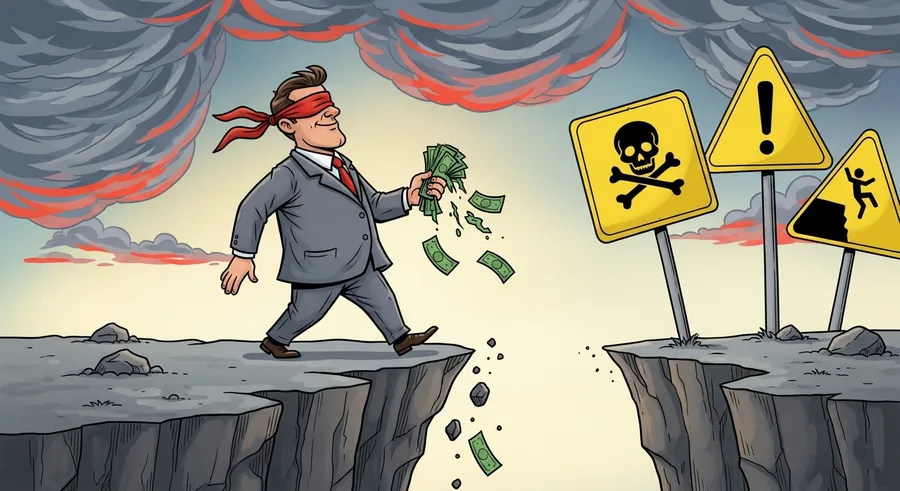
Think about how much your assets swing during news. A big report might not trigger a hard stop in your account. But it can cause slippage. This means your stop order gets filled at a price much worse than you wanted. This slippage is a hidden cost of news. By avoiding trades during these times, you protect your account. You stay safe from the unpredictable gaps in market liquidity.
Related guide for Swing Trading a Prop Firm Challenge: Rules and Risk: A useful companion for this decision is Can You Trade News During a Prop Firm Challenge?. News permission depends on the program and account stage. Use this guide to check windows, manage open risk, and avoid assumptions in fast markets.
Use Orders Deliberately
Your stops, targets, and pending orders must match the platform rules. Check the specific symbols, the minimum distance, and the volume limits. Make sure an order stays valid across the daily market close. Understand if it might trigger at a different price when the market reopens. Many platforms reset orders at the daily close. Others keep them until you cancel them. You must know exactly how your broker handles your orders at night.
Do not leave many unmonitored orders around key price levels. Each pending order creates potential risk for your account. Several orders across related markets can create more exposure than your plan suggests. If you have 5 pending entries and they all trigger during a news spike, you might have too much leverage. This can lead to a fast and unintended account breach.
Use limit orders to set your entries and exits when possible. Using market orders during thin liquidity can lead to large price changes. By placing your orders exactly where the firm allows, you lower the risk of errors. Check your order list often to ensure no old orders stay active. An accidental order trigger could quickly ruin a well-managed swing strategy.
Create a Swing Review Routine
Use set review times instead of watching the screen all day. Check your account limits, the calendar, and your current margin. Look at your open risk and any rule changes at specific times. This approach supports good management. It does not pretend that you can control every overnight move. A calm, step-by-step approach is much better than reacting to every tiny tick of the chart.
Keep a detailed record of why you entered the trade. Note your exit point and your planned holding time. Write down any changes you make while the trade is live. If a trade no longer matches your original reason, reassess it. Do not keep it open just to avoid a loss. The market does not care about your past analysis. Holding onto a failing trade is a common way to waste your remaining account drawdown.
When the weekend comes, focus on following all rules. Many traders lose their accounts by forgetting weekend holding rules. Create a checklist for every Friday afternoon. Check that all positions meet the rules for the next week. This simple habit prevents a disaster. You will not return on Monday to find your account closed because of a simple mistake.
Scaling Positions During Swings
You need a plan to add to a winning trade. You must respect the total risk allowed by your firm. Many traders make the mistake of adding too much size. This makes a managed swing into a risky bet. Every new order must account for the same gaps as the first. You must ensure the full position size fits your account limits. Always consider the risks of price changes while you sleep.
For example, assume your account limit is $5,000. You start with $1,000 of margin. You add to it once you have $500 in profit. If you add a second position of the same size, your exposure doubles. If the market drops overnight and hits your stops, the loss might exceed $5,000. Always total the potential loss for all trades before you scale.
Scaling also makes it harder to calculate your exit points. Each extra trade changes your average entry price. This changes the distance to your target and your stop. Track the break-even point for the whole set of trades. You must know when the total position becomes a net loss. This helps you protect your account status.
Some firms limit the total number of trades you hold. Scaling might push you over these limits. This is a rule break even if the trade shows profit. Check your platform rules for limits on each asset. Never assume you can add more just because you have margin.
Think about closing partial positions as the trade gains value. Closing some units secures a buffer for your account. This lowers your total exposure during the night. You keep some profit while leaving part of the trade active. This helps manage risk while still aiming for more gains.
Adjusting for Seasonal Volatility
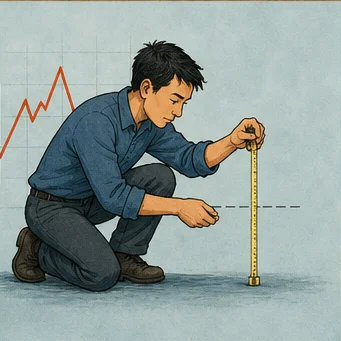
Market activity is not the same all year. Times like summer or holidays often have low volume. Low volume can lead to wider price gaps. You must change your strategy based on the time of year. A risk level that works in spring might be too high in winter.
For example, you might use a 2% stop on a currency pair. In quiet summer months, the market range may drop. If you keep a 2% stop, normal noise might hit it. If a holiday causes a price spike, the same stop might fail. Always check your stop distance against current market activity.
Historical data shows how an asset acts in certain months. Use this to see if you need a wider buffer. You might also want a smaller position size. If an asset gaps on low volume, reduce your risk. Protecting your account is better than catching a small move.
Firms might change margin rules based on global events. Look for news about margin increases for specific assets. These changes can lower your available cash suddenly. If you miss these updates, you might lose your ability to trade. You could even face forced closure of your open trades.
Your plan should include a review of the current market mood. If the market is shaky, hold your trades for less time. Being careful when conditions get bad shows a smart trader. Do not feel you must hold if the risk feels too high.
Mitigating Correlated Asset Risk
Many traders build a list of assets that move together. For instance, holding three items that react to the dollar creates hidden risk. This concentration acts as a force multiplier during a crash. If the dollar jumps, all three trades fall at once. You lose your account buffer because you ignored the link between them.
For example, a trader buys gold, silver, and the Australian dollar. These assets often move in the same direction. If a big event happens, all three can fall at the same time. The trader might think each risk is small. However, the sum of all three is much higher than expected. This is the danger of having linked assets.
Use a tool to see how your trades relate to one another. Many free tools show the history of your chosen assets. Try to hold trades that do not share the same cause. If you must hold related assets, make each one smaller. This keeps your total risk under control.
Diversification is about having trades that respond differently to news. If one trade is long and another is short, they might balance out. This makes your account stronger during a market shock. It keeps you safe from sudden, unexpected price swings.
Check your open trades often for hidden links. Sometimes assets move together for a while even if they usually do not. Be ready to close a trade if you see them moving as one. Managing total correlation is a key part of finishing a challenge.
Related guide for Swing Trading a Prop Firm Challenge: Rules and Risk: For the next practical part of your preparation, continue with Trailing Drawdown in a Prop Firm Challenge Explained. Learn how a moving drawdown floor changes the usable risk in a challenge and how to track it without treating profit as extra permission.
Preparing for Infrastructure Failure
Platform and server stability is a technical risk you should not ignore. If you lose your connection during a trade, you cannot get out. You must prepare for this with a clear backup plan. Always know how to close a trade if your software stops working. Keep a note of your web portal or emergency phone number.
For example, the internet might fail just before a big news report. You have a swing trade you meant to manage. Without the platform, you cannot move your stop or sell. If the price moves against you, the loss could be very large. Always place a hard stop-loss order right when you enter.
Test your backup methods from time to time. Try to log in from a different device or network. Keep your login info in a safe place you can reach in a hurry. If there is a mobile app, install it and check that it works. Being ready ensures you are not stuck if your computer fails.
Some firms have rules for trades hurt by server lag or outages. Keep records of any problems with clear time stamps. You should not expect the firm to fix your mistakes. Still, having a record is good if you must explain a deviation from your plan.
The best protection is to keep trades simple and stops firm. Avoid complex automatic orders if your platform is not stable. By setting a hard stop at the start, your risk is defined. Even if your internet fails, your stop remains on the server. Focus on trades that do not need your constant attention.
Calculating Drawdown Beyond Balance
Many traders watch their account balance but ignore how floating losses affect drawdown. Firms often use an equity system that tracks your lowest point during the day. This is a trap if you hold a trade through a volatile session. Even if you finish the day in profit, a dip might break your drawdown limit. Map your risk against the lowest possible equity point during your hold.
Think about how your firm handles data from the weekend. Some platforms update equity only while markets are open. Others apply gap changes as soon as the market reopens on Sunday. Holding positions over the weekend creates a big blind spot. A gap down of 100 pips could end your account before you can react. Looking at charts alone hides the true risk of holding over the weekend.
Hypothetical Example: Suppose your account limit is $4,000. You hold three trades with a floating profit of $300. During the Friday night rollover, spreads widen and cause a temporary spike in loss to $3,800. Because the firm uses equity, your account balance drops to $200 above the breach point. Even if the market corrects by Monday, you were in a danger zone that could have triggered automatic closure.
Create a safety buffer by discounting your available drawdown by 30% before holding long trades. This cushion protects you against the lack of liquidity during the night. By keeping your effective usage lower, you gain space to survive regular market noise. Never treat your full drawdown limit as spendable cash. It is a survival threshold to protect against sudden market gaps and shifts in liquidity.
Check how often your firm calculates drawdown each week. If they update every 5 minutes, your risk of hitting a stop is much higher. Adjust your position size to fit the speed of the firm calculation cycle. Faster cycles need smaller trades and tighter risk management. Slower cycles give you more room but still require caution about risk held overnight.
Managing Risk During Low Liquidity
Market liquidity is your ability to exit a trade at your desired price. After the market closes, liquidity often vanishes. This creates a large gap between your stop-loss and the actual sale price. When you swing trade, you accept that your exit may happen at a worse price than the one you saw. This is called slippage and it happens most often during gaps.
Check the liquidity of each asset before you enter a multi-day trade. Major currency pairs usually have better depth than exotic pairs or small stocks. If you trade low-liquidity assets, lower your position size to account for potential slippage. A trade that moves 1% against you could cost 2% if the market gaps through your stop. Always assume the worst exit price when you calculate your maximum potential loss.
Hypothetical Example: A trader enters a low-liquidity stock with a stop set to lose $50. During the night, bad news makes the stock open $5 lower than the close. No buyers exist at the stop level, so the order executes at the first price, causing a $200 loss instead of $50. This larger risk can cause an immediate breach of your account rules.
Avoid placing stops near key technical levels during low volume times. Large institutional orders often sweep these areas, and the lack of buyers can push prices through your order without a clean exit. Use wider stops if you must hold overnight, but pair this with a smaller position size to keep dollar risk the same. This balance keeps you safe from normal market swings.
Watch the daily average volume for your chosen instruments. When volume drops, your risk increases. If you see a steady decline in participation, reduce your market exposure. Swing trading works best in deep, liquid markets where you know exit orders will fill near your price. If you cannot find a clear exit path, ask if the setup is worth the risk of holding overnight.

Controlling Emotions During Long Trades
Holding a trade while away from the screen tests your mental strength. You might feel the need to check your account during the night. This often leads to bad choices like closing a trade early or adding to a loser. You must commit to a hands-off approach after setting your plan. Let your strategy work without letting your feelings get in the way.
Make your plan so it stays valid during minor news events. If your trade depends on a specific hourly change, you are probably managing the position too closely. A solid swing trade should survive daily noise. If you constantly adjust your stops or targets, you are likely trading on gut feelings. Such habits drain your focus and cause mistakes that break firm rules.
Hypothetical Example: A trader enters a long trade to hold for 5 days. On day 2, the price drops 1%, and the trader feels worried. They move their stop-loss closer to lock in current gains. The price then pulls back to the original entry point before hitting the profit target. Because they moved the stop, they exited early and lost the full profit. Their fear caused them to miss the main trade goal.
Set up a calm workspace for checking your progress. Do not review trades when you are tired or distracted. Use a set list of metrics every time you check your account, like distance to drawdown and upcoming news. By using a standard review, you reduce the impact of emotional swings. You want to move from reacting to having a calm, systematic view of your trades.
Avoid the urge to over-trade when holding a position for several days. Some traders open new, smaller trades to fill the time. This is dangerous because it creates hidden risk and uses more margin. Treat every new entry as a separate choice that must pass all your rules. If your current swing trade uses your full risk limit, do not add more trades just because you feel bored.
Developing a Compliance Audit System
A successful trader treats rule compliance as a top skill. You should build a strict check system to use before and after every swing trade. Start by reading the firm rules again, especially the list of forbidden news or symbols. These policies update often, and using old data is a fast way to lose your account. Your reputation depends on your ability to track these changes.
Make a paper or digital list for every trade. Include items such as: Is the symbol allowed for swing trading? Have I checked the news calendar for the next 72 hours? Is my size under the account limit? Have I verified that no holiday will disrupt the market? By checking these points every time, you avoid the simple mistakes that cause most disqualifications.
Hypothetical Example: A firm sends notice that trades in a specific index must close by 12 PM on Fridays. A trader forgets this rule and leaves a position open through the weekend. On Monday, they find their account disabled for breaking the new rule. This violation was easy to avoid if the trader had checked the firm announcement board at the start of the week.
Write down the results of your checks in a log. This serves as proof if a tech glitch happens later. If you show you always performed checks and acted in good faith, you have a better case with support. More importantly, this process makes your own habits stronger, ensuring that you do not cut corners when you feel confident or rushed.
Spend time every weekend reviewing your entire account status. Look beyond single trades to see the big picture of firm requirements. Are you getting near your drawdown limit? Have you reached your maximum allowed open trades? Use this time to clean up, remove old orders, and update your strategy for the new week. Consistency in your audit process is the bedrock of long-term success.
Final Takeaway
Swing trading can only fit a prop firm challenge when its holding periods and risks align perfectly with the account's actual permissions and drawdown mechanics. Overnight exposure requires a much larger margin for uncertainty than a simple intraday stop. Always treat the overnight period as a source of potential volatility that could impact your account's safety.
Keep your position size, total margin, and correlated exposure modest enough that a sudden gap or event does not transform a planned swing trade into an account-level crisis. By planning for the worst case and maintaining a disciplined routine, you provide yourself the best possible chance to navigate the evaluation without falling victim to technical rule violations.