

Consistency rules have become a standard part of how many professional trading firms manage their risk. These rules typically focus on how a trader distributes their performance over time. Common areas include profit concentration, position sizing, active trading days, and general behavior patterns. Because firms define these terms differently, you must always look at the specific wording for your current account rather than applying broad assumptions from other programs.
A common mistake is attempting to manufacture trades or adjust your behavior solely to satisfy a rule. This often leads to unnecessary risks. A more sustainable approach involves maintaining a reliable, repeatable process. You should focus on keeping detailed records of your activity. By understanding how the normal fluctuations in your trading results interact with your program's specific payout or review conditions, you can navigate these requirements without compromising your strategy.
The following sections offer a way to think about these rules. They aim to help you connect your trading decisions to the firm's requirements. By staying organized, you reduce the chance of surprises when it comes time for an account review.
For the broader service-selection and evaluation framework, use the prop firm passing service guide alongside this focused review of prop firm consistency rule guide for challenge traders.
Read What Consistency Means Here
Your first step is to locate the exact definition provided in your firm's terms. Look for the formula, the measurement period, and the consequence of failing the metric. A rule limiting how much a single day can contribute to total profit differs significantly from a rule about maintaining stable lot sizes or a minimum number of active days. Misinterpreting these definitions often leads to stress during the final stages of a trading cycle.
Check exactly when the rule applies. Does it start during the evaluation phase, or does it only trigger after you have achieved funded status? Some rules apply consistently throughout the entire process, while others may only become relevant when you request a payout. Never assume that a condition you saw in your challenge summary automatically disappears once you receive an account. Always check the current documentation for the specific account type you are holding.
You might also find that rules shift based on the account model. A 1-step challenge may have different consistency requirements than a 2-step challenge. Do not look for general consensus on forums. Instead, search your specific account dashboard or the firm's primary objective pages. If the documentation remains unclear, reach out to support for clarification. Knowing exactly what the firm measures is the difference between a controlled plan and a reactive guessing game.
Calculate Profit Concentration
When the firm provides a mathematical formula, you should track your daily eligible profit and the total profit used by that specific calculation. For instance, a largest-day ratio often compares one day's qualifying profit against the sum of total qualifying profit. However, firms often vary on whether they include or exclude specific days, fees, or commissions. You need the exact definitions from the program to ensure your personal tracking aligns with their backend systems.
Update your records immediately after you close trades rather than relying on estimations from your trading chart. A losing day, accumulated commission fees, or later profit can shift your ratio significantly. If you make decisions based on a simplified number that the terms do not support, you risk drifting into non-compliance. Always treat the formula as a hard constraint that reflects your cumulative trading performance over the entire period.
Consider this hypothetical example: You have a total profit of $8,000. Your single best day resulted in a $4,500 profit. If the firm uses a 50% rule based on total profit, your ratio is 56.25%. This exceeds the limit. You now know that you must either produce more profit on other days or accept that your current concentration remains too high. Being aware of this gap allows you to manage your trading expectations appropriately without making irrational moves.
Keep Sizing Explainable
A consistent trading process does not require you to use identical position sizes on every single trade. Market conditions naturally change. Factors like stop distance, asset volatility, and the remaining room in your account justify changes in how much capital you put at risk. What matters is that your size changes follow a documented risk management method rather than an emotional response to a recent win or loss.
Large, unexplained jumps in exposure make both your own risk management and any later review by the firm much more difficult. If a reviewer looks at your history and sees trades that vary wildly without a clear reason, they may question your process. Set a maximum risk unit for yourself. If you decide that an exception is necessary due to a high-probability setup, write down why before you enter the position. Keeping this log helps you justify your actions later.
Keep sizing history explainable
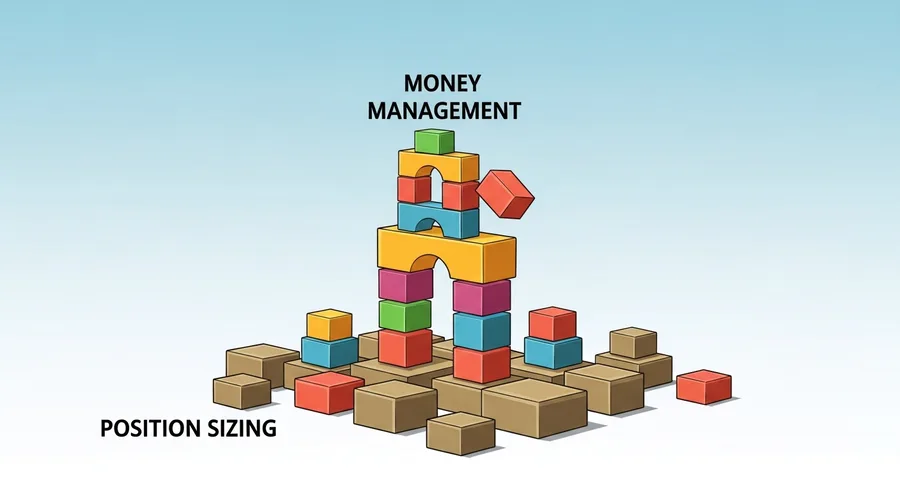
Think of your position sizing as an extension of your risk management strategy. If you typically risk 0.5% per trade but suddenly take a 3% risk on one day, the math will show a clear divergence. If that large trade ends up being a significant profit, it might trigger consistency alerts. By maintaining a steady, explainable approach to your sizing, you create a history that demonstrates competence. This makes it far easier to defend your results if a manual review of your account occurs.

Do Not Manufacture Activity
Minimum-day or pacing provisions exist to ensure that you do not just hit a target with one lucky trade. You should read these provisions literally. However, they should never turn a period of weak market conditions into a reason to force compulsory trades. An unnecessary position taken just to satisfy a minimum-day rule often adds risk without improving the quality of your record. If you have no setup, do not trade, regardless of the minimum activity requirement.
Use valid, high-probability setups during the sessions you can monitor effectively. If a rule creates a scheduling concern or conflicts with your ability to focus, ask official support how they define qualifying activity. Do not rely on interpretations found on social media platforms or independent forums. Those interpretations are often outdated or based on completely different firm models. Get the information directly from the source to keep your plan grounded in fact.
Avoid forcing trades for activity
Imagine a scenario where you have 2 days left to meet a minimum-day requirement, but the market has entered a low-volatility period. You decide to open tiny positions just to mark the days as active. If these positions incur losses or cause slippage, they can actually hurt your overall performance statistics. It is better to focus on your defined edge. If you truly cannot find setups that fit your plan, accept that the account might not progress in that specific time window.
Use a Repeatable Strategy
Define your trading context, entry trigger, stop-loss placement, target, and cancellation conditions in clear, observable language. When you have a stable process, it becomes much easier to distinguish normal fluctuations in market opportunity from behavior that has drifted under pressure. A drift in strategy is often the first sign that a trader is no longer following their original plan, which can lead to patterns that fail consistency tests.
Review your performance results specifically by setup and session. If a particular type of trade is producing unusually large risk or profit compared to others, determine whether it still fits your documented method before you repeat it. Sometimes a specific setup captures a market anomaly. If that anomaly repeats, your consistency might be fine. If it was a one-time event, avoid assuming you can rely on it to keep your account within the required consistency thresholds.
Consistency is essentially a measure of your trading quality over time. If you use a diverse set of strategies, try to categorize them in your journal. This allows you to track whether one strategy is consistently outperforming the others in a way that risks your account rules. If you find that one approach is extremely profitable but volatile, you might decide to scale back your position size for that specific setup. This type of adjustment shows active risk management.
Related guide for Prop Firm Consistency Rule Guide for Challenge Traders: A useful companion for this decision is How to Avoid a Prop Firm Payout Denial. No payout is guaranteed, but clear records, permitted trading methods, and careful verification can reduce avoidable friction before a request.
Account for Event-Driven Outcomes
A scheduled news release can create an unusually large win, loss, or spread gap that impacts your account. Always check whether your firm allows trading during specific news events and understand the consistency implications before holding exposure. An exceptional result from a news trade can suddenly spike your profit concentration. If you know that holding through an event might create a statistical outlier, you should prepare your records to explain the nature of that trade.
If a permitted event trade leads to an exceptional result, preserve the full calendar, your rationale, the specific orders, and your risk calculation. A professional record is far more useful than a retroactive explanation if the firm flags your account for a review. They want to see that you had a plan and executed it according to your strategy, not that you simply gambled on a market move.
Consider a hypothetical trade where you hold a position through a major central bank announcement. You set a fixed stop, and the market moves significantly in your favor, resulting in a large gain. If this single trade represents 50% of your total profits for the week, it could trip a consistency filter. If you documented your intent to trade the event due to the expected volatility and kept your risk within normal bounds, your case for a fair review is much stronger.
Keep an Audit-Ready Journal
A concise journal should connect each of your trades to a setup, your planned risk, the actual execution, and a check of your account rules. Maintaining a journal is not a guarantee that the firm will approve your next request, but it gives you the ability to answer factual questions with more than just a vague memory. When a reviewer asks about a specific peak in your performance, you can point directly to the trade logs that explain it.
Retain your trading statements, dashboard snapshots, and copies of the program terms alongside your journal. Keep your sensitive account information secure at all times. Use only the firm's verified support channels if they request documentation. Being organized with your data shows the firm that you treat the account with professional care. It removes the guesswork and helps you remain calm if a request for information arrives during your trading week.
Your journal should be a living document. After each day, review your stats against the firm's consistency rules. If you see yourself approaching a limit, you can adjust your upcoming activity. This proactive monitoring is the best way to maintain a clean record. Do not wait until the end of the month to see how you performed. By then, it may be too late to rectify any patterns that the firm might flag as inconsistent.
Review Before a Payout Request
Before you request a payout, always recalculate your stated consistency measure. Compare your entire performance history with the current funded conditions provided by the firm. Check your payment windows, profit eligibility requirements, minimum activity counts, and any pending documentation requirements at the same time. Doing this pre-check prevents unnecessary delays in the payout process that often occur when simple objective requirements are missed.
If a metric is close to a threshold or if the calculation remains unclear, do not invent corrective trades to fix it. This is a common trap. Trying to balance your numbers with filler trades often leads to more rule violations. Instead, seek written clarification from the firm's support team. Continue only with trades that independently meet your plan and permissions. Your integrity in following the rules is often as important to the firm as your profit performance.
Remember that a payout request is essentially an audit of your account. The firm wants to ensure that you followed every guideline consistently. If you can present a clean, verified history, the process will go much smoother. If you find that your numbers are right on the edge of a rule, consider waiting for another day of trading to dilute the concentration. This is a much better approach than rushing the process and potentially failing a final review.

FTMO's October 2026 Change: Total Profit Versus Positive Days
FTMO's update from 8 October 2026 stated that new 1-Step Challenge orders created from 12 October 2026 at 09:00 MetaTrader platform time use the new consistency rule. FTMO Accounts (1-Step) merged on or after that date are also impacted. Earlier orders generally retain the legacy Best Day Rule. You should check the rule displayed in your Account MetriX rather than assuming every existing account automatically transitioned to the new system.
Under this current rule, the best day's closed profit must not exceed 50% of the total profit across all trading days, including losing days. The legacy rule, by comparison, looks at the best day relative to Positive Days' Profit, which includes only the days with positive daily net P&L. The denominator makes a massive difference. A losing day reduces your total profit, but it does not reduce the sum of profitable days. This effectively makes the new rule stricter about losing days.
FTMO's older introduction article may still contain a different effective date in an older note. For this guide, this guide uses the 8 October operational update and current Trading Objectives. If your order is near the cutoff date, confirm the applicable rule directly with support. Do not guess which rule applies. Knowing for certain if your account uses total profit or only positive-day profit is critical for calculating your current standing and avoiding accidental violations.
A 4-Day Calculation and a Safe Way to Track It
Consider daily closed results of positive $6,000, negative $2,000, positive $4,000, and positive $2,000. Your total profit is $10,000, and the best day is $6,000. Under the new 50% consistency rule, your ratio is 60%, meaning the requirement is not met. Under the legacy definition, your profitable days sum to $12,000. The same $6,000 best day represents exactly 50% of that sum, which would pass. The difference in rules is substantial.
If your best day stays at $6,000, your total profit must reach at least $12,000 to meet a 50% total-profit threshold. Another loss will increase the extra profit you need to earn. A new, higher best day will push the requirement even further. When your total profit is zero or negative, do not try to present a percentage as an eligibility signal. Focus on simply returning to a profitable state while keeping your daily risk within bounds.
Track consistency thresholds as objective
FTMO describes exceeding this consistency threshold as an unmet objective rather than a hard rule breach. However, this is not an invitation to force extra trades or ignore your daily and overall loss limits. Continue only when your normal setup qualifies. Update the calculation after each closed trading day, and check your other objectives separately before you request a reward. Treating this as a disciplined administrative task keeps your account status clear and manageable over the long term.
- Record each day's net closed P&L using the firm's specific trading-day boundary.
- Track your best-day profit, total profit, and profitable-days profit in distinct, separate columns.
- Use the exact denominator specified for the account's order and merge history.
- Recalculate your metrics after every loss and after every new best day, not just after profitable sessions.
- Review your performance against the 50% threshold after every single trading day.

Related guide for Prop Firm Consistency Rule Guide for Challenge Traders: For the next practical part of your preparation, continue with Prop Firm Minimum Trading Days Strategy. Meet a minimum-day requirement by planning valid opportunities and spare sessions, not by forcing low-quality trades or increasing risk.
Scaling Positions and Consistency Limits
Position sizing is the primary tool used to manage risk, but it also creates the biggest swings in your performance metrics. If you scale your size significantly based on confidence or market conditions, you may create a single day of profit that triggers a consistency violation. Many traders fall into the trap of increasing their size only when they are already winning, which concentrates their gains into fewer days. This approach makes it nearly impossible to keep your best day under the 50% threshold.
Consider this hypothetical example. You trade 1 lot for 4 days and earn $500 each day for a total of $2,000. Your best day is $500, which is 25% of the total. On the 5th day, you scale to 5 lots because the setup looks perfect and you earn $2,500. Your new total profit is $4,500, but your best day is now $2,500. Your concentration ratio jumps to 55%. You have crossed the limit purely by changing your scale.
Scale positions to maintain balance
You must view scaling not just as a way to maximize profit, but as a risk that changes your statistical profile. If your firm limits your best day to 50% of total profit, your scaling must be predictable. It is rarely worth the risk to deviate from a standard position size during a stretch of performance. Keep your scale tight if you are near a payout request to ensure your results stay within the expected range.
Some traders attempt to mitigate this by spreading their scaling across more days. If you identify a high probability trend, consider splitting your entry into smaller, recurring positions over several sessions. This helps build total profit more uniformly. It avoids the spike of a massive single day profit. This method takes patience, but it keeps your account profile balanced and reduces the risk of manual reviews.
Always review your trade log to see how size changes affect your percentage of daily profit. If your largest trades consistently drive your performance, you are operating on a razor edge about consistency rules. Aim for a flat sizing model where your risk remains consistent regardless of the perceived quality of a setup. This creates the most stable path to passing and maintaining your funded status.
Recovering from Drawdowns Without Violating Rules
A drawdown phase often triggers a fear response that leads to inconsistent trading. You might feel the need to win back losses quickly to stay in the program. This often leads to over-trading or skipping your normal rules to grab quick points. Unfortunately, this behavior creates an erratic performance curve. Even if you recover your balance, the uneven nature of those recovery trades can lead to consistency flags.
Imagine you lose $3,000 over 5 days due to a bad market cycle. Your total profit is now negative. To recover, you use 4 times your normal risk on a single move and gain $4,000 in one day. You are now $1,000 in profit. However, your best day profit of $4,000 is 400% of your total account profit. This makes your account look like a single-trade gamble rather than a systematic process.
Recover drawdowns using consistent risk
The best way to recover from a loss is to stay within your original risk limits. If you typically risk 0.5% of your account per trade, keep doing so even when you are in a deep hole. Your recovery will take longer, but it will be statistically consistent. The firm prefers to see a steady return to profitability rather than a spike that suggests you are gambling to save the account.
If you find yourself in a drawdown, prioritize protecting your remaining capital over hitting the target. If you reach the end of a week with a net loss, accept it. Use the weekend to reset your mindset. Do not attempt to force a large recovery on the final day of a period to satisfy a rule or a profit target. A disciplined loss is always better than a reckless, high-risk win that triggers a compliance warning.
Log recovery steps for reviews
Document every step of your recovery process. If you follow your plan, you can explain that your trading remained consistent even during a drawdown. This honesty helps if the firm conducts a review. They look for traders who can handle stress without abandoning their rules. Your ability to stick to your process while losing money is a key indicator of your long term potential.

How Fees and Slippage Alter Your Metrics
Many traders calculate their own consistency metrics based on gross profit. This is a common error. Firms calculate consistency based on net profit after commissions and slippage are deducted. Because these costs are often higher on your best days, especially if you are trading larger sizes or during volatile news, they significantly reduce the qualifying profit for that day. You must track your net results to stay accurate.
Consider this hypothetical scenario. You have 3 days of trading. Day 1 earns $2,000 gross with $50 in fees. Day 2 earns $2,000 gross with $50 in fees. Day 3 is your big day, earning $5,000 gross but with $300 in slippage and fees. Your net for day 1 and 2 is $1,950. Your net for day 3 is $4,700. Your total net is $8,600. Your best day percentage is 54.6%.
Calculate net performance including costs
If you had ignored the fees, you might have thought your best day was $5,000 out of 9,000 total, which is 55.5%. The difference between gross and net can change your status from passing to failing. Always verify how your platform displays fees. Some platforms show them on a separate ledger, while others subtract them from the trade result immediately. You need to know the specific accounting method of your firm.
Slippage is even harder to track because it is hidden in your execution price. A trade that should have made $500 might only net $450 due to a bad fill. This difference reduces the denominator in your consistency formula. It effectively makes your best-day percentage higher. If you trade volatile assets, you must account for this hidden cost in your daily tracking.
Keep a spreadsheet that automatically subtracts your estimated commissions from your daily gross profit. If your firm publishes a fee schedule, use it to calculate the exact drag on your account. This prevents the surprise of finding out you failed a consistency test by a few percentage points. Knowing your exact net-to-best-day ratio gives you the power to pull back your risk when you get too close to the limit.
Understanding Trading Day Boundaries
Firm rules are tied to specific daily time boundaries, such as 17:00 New York time. Any trade closed after that time belongs to the next day. A common mistake is closing a large trade exactly at the cutoff. Depending on the firm's system, a trade closed at 16:59:59 might be counted as part of the current day, while one closed at 17:00:01 moves to the next. This split can make or break your consistency ratio.
Imagine your rule requires your best day to be under 50% of total profit. You have a massive win that would put you at 60%. If you split your exit, you could close half of the position before the cutoff and half after. This spreads the profit across two days, potentially bringing your ratio down to a compliant level. You must know your firm's exact clock settings to do this effectively.
Observe trading day boundary times
Check your platform's server time against the firm's specified boundary. Do not rely on your local computer clock. If your firm uses a specific server, ensure your charts reflect that time zone exactly. A delay of just a few minutes can lead to a trade being recorded on the wrong day. This mistake has caused many traders to fail a review after they thought they had successfully spread their risk.
If you are trading near the end of a session, be aware of the impact on your consistency. Avoid opening new, large positions just before the cutoff. These positions often lead to erratic behavior if they need to be managed overnight or into a new daily window. Focus on closing your positions in a way that aligns with your daily profit goal rather than chasing a few extra dollars that could jeopardize your account status.
Check consistency before market close
Create a checklist for the final hour of your trading day. Verify your current total profit and your current best day. If you are close to the threshold, decide on a plan for your open positions. Should you close them to lock in a small gain, or let them run and risk a concentration spike? Having a pre-decided protocol for this situation ensures you do not make emotional decisions at the very moment the daily boundary shifts.
Final Takeaway
Consistency is best managed by maintaining transparent risk, using valid setups, and keeping accurate records rather than relying on artificial pacing strategies. A strong day is often just a result of normal trading variance, but it still requires careful documentation to show the firm that your performance is stable.
Always remember that the program's specific definitions control your account's status. Review these terms carefully at every stage of the evaluation and funded process. If the formula or the consequences of a rule are uncertain, seek written clarification from the firm before proceeding. Managing your administrative requirements with the same focus you apply to your charts will help you avoid unnecessary issues during your journey as a trader.